Forth Engineering, a Cumbrian engineering company is leading the development of a welding robot to repair pipelines from the inside.It is being described as a ‘world-first pipeline technology that will revolutionise performance and safety in industries around the world’.
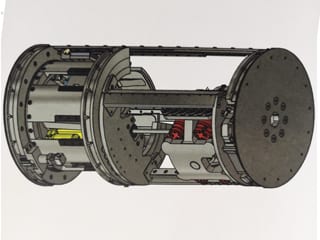
The FSWBot is a friction stir welding robotic crawler for internal repair and refurbishment of pipelines, which is being developed by a consortium led by Forth Engineering in Cumbria with UK government backing. The consortium includes TWI, J4IC, Innvotek and London South Bank University. The development project is due to be completed by end of January 2021.
According to the company, the FSWBot is envisaged to be a five-segment or six-segment PIG type vehicle which will be inserted at the production end of an oil pipeline and will travel with the oil flow to a pre-designated spot to perform a repair. One segment will carry the FSW machine and a steel patch dispenser, with the other segments carrying the navigation, control system, communications, non-destructive testing (NDT) and power storage/generation payloads.
On entering the pipe segment containing the pre-identified defects, the robot will stop, then slowly advance until the FSW system is in place over the defect. It will then lock itself in place and confirm that it is correctly located to perform the repair.
An onboard turbine in a duct within the robot will harvest energy from the oil flow within the pipe to augment any power cells carried on the system, with the duct providing through flow in the pipe.
Once energised, the FSW unit will deploy a milling tool to cut away the corroded area and prepare a pocket in the pipe wall into which a steel patch will be dispensed.
The FSW unit will then weld this patch in place and deploy the milling system again to ensure that the patch is flush with the pipe wall and will not initiate turbulent flow, nor impede the passage of subsequent cleaning or inspection PIGs.
FSWBot will then deploy NDT packages to inspect the weld for quality assurance before unclamping and moving downstream to repeat the process on any further defects.
Aarhus University, Denmark, has announced that researchers from its Department of Engineering’s ICELab are developing a new, intelligent and self-powered sensor to monitor rust found on steel reinforcement within concrete infrastructures.
The project is being conducted in collaboration with IdemoLab, at the technological service company FORCE Technology, Brøndby, Denmark, and is being funded by Innovation Fund Denmark.
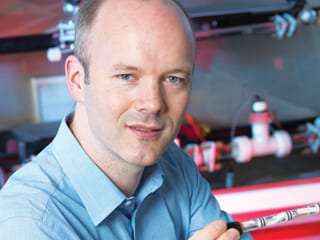
According to Aarhus University the current corrosion sensors used for rust monitoring are “indicative” and “energy-demanding” in addition to being dated, error-prone, and costing up to roughly $5,500 per measuring point.In an effort to update the aging technology, Associate Professor Farshad Moradi from the University’s Department of Engineering has established project DIGIMON, which aims to develop smart, self-powered patches for updated corrosion monitoring.
The aim of this project is to develop a plaster sensor which is placed on the reinforcement and moulded into the concrete construction. The sensor and interfacing electronics will be powered by means of energy-harvesting technologies to ensure continuous monitoring of the condition of the steel.
Moradi further explained how the plaster sensors will work, describing that once developed, the sensors would use ultrasonic waves generated locally in the self-powered sensor inside the concrete to monitor the corrosion.Once information is collected from the developed plaster sensors, it would be sent to a central computer to be processed.
ETCC2020 – the European Technical Coatings Congress, organised by FATIPEC – Federation of Associations of Technicians for Industry of Paint in European Countries, and SITPChem – Polish Association of Chemical Engineers will take place on 2–4 September 2020 in Krakow, Poland.
ETCC2020 is one of the most prestigious and important technical and scientific coatings events, creating a platform and a meeting point of industry and science, represented by institutes and universities.The congress creates the possibility of international co-operation and collecting unique knowledge about the newest materials, products, processing, equipment, research and testing. The Congress has 70 years of tradition and will cover the latest scientific and technical achievements in paints, coatings, adhesives and construction materials.
During the three days of the event there will be plenary presentations, 3–4 parallel sessions, poster presentations, and an exhibition. A “Summer School” with lectures dedicated especially for young scientists and students forms a separate part of the congress.
The speakers represent the largest companies, institutes, and universities across Europe, as well from other countries world-wide.
Further information can be found on the congress website,
www.etcc2020.org
In an article in The Times (Friday 17th January 2020) on the use of hydrogen as an alternative fuel for cars, the ICorr President, Gareth Hinds, who works on hydrogen technology at NPL, was quoted.Gareth noted that electric vehicles alone are not a magic solution to reduce carbon emissions and that hydrogen fuel also has a role to play. He also noted that the use of hydrogen fuel cells is more suitable for heavy vehicles and longer distances, making them a good option for freight transport.
As has already been announced, the Institute has a new image and this will involve rebranding of the website, stationery, documentation and marketing material, and of course this magazine.To help with this new image, the Institute launched a photo competition to find images that are people-focused and celebrate the people that make ICorr, or capture a wide range of activities, such as people networking, working on-site, people in labs, people inspecting, or people achieving accreditations and awards, rather than tired-looking images of rusty components previously used. The designers were looking for uplifting photos of pristine, gleaming infrastructure to emphasise that our members get things right!
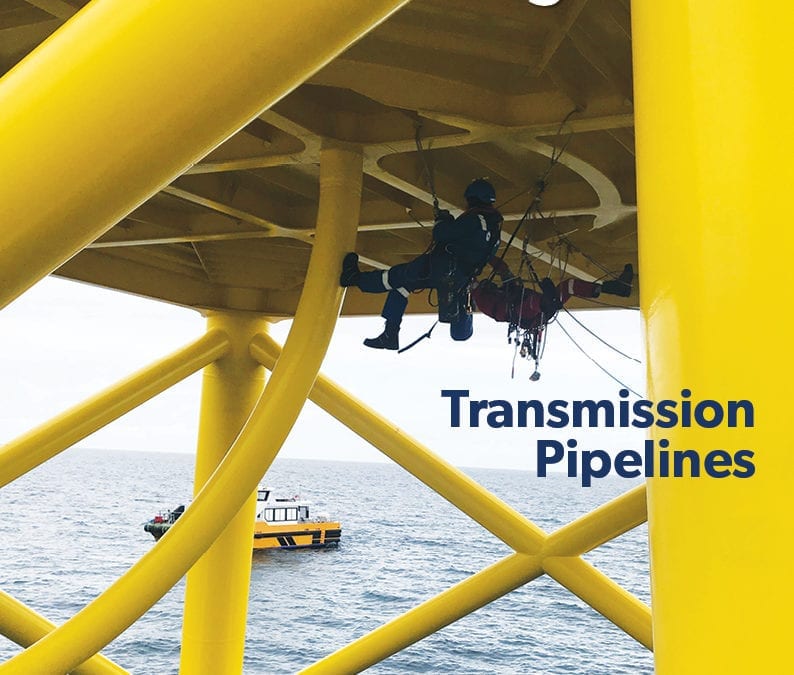
The winning photo of an under-deck inspection on an offshore wind turbine jacket, picked by a panel of ICorr judges, was submitted by Simon Dunn, Dangle Ltd, and is featured on the cover of this issue of the magazine.It will also feature on the landing page backdrop of the rebranded website.
William Michael (Bill) Cox (14 Apr 1950 – 3 Dec 2019)
I first met Bill shortly after I joined the UMIST Corrosion and Protection Centre in 1983. I had been interested in corrosion sensors for detection of hydrogen, and had several discussions with him about the feasibility of the various available corrosion detection methods (mine was useless!). He always focussed on the argument that there was no point knowing whether corrosion was happening unless you also were prepared to intervene to manage the corrosion process. However, at the time industry was more interested in repair after failure rather than management of the processes leading to failure. Of course, being 10-15 years’ ahead of the game Bill was exactly right and over his career he became one of the leading figures in risk and asset management of plant where corrosion is generally the dominant failure process.
Born in Keithley in Yorkshire, Bill was a boy soprano and chorister, he played the piano and the guitar, he was a keen motorcyclist and owner of a vintage BMW K100RS, a very devoted family man, and a serial speeder in either of his two elderly Audis.He completed his undergraduate studies in metallurgy on a sandwich course at the University of Aston in Birmingham in 1975 during which time he met the ‘girl’ who was later to become his wife.On completion of the programme he went to work at the copper-nickel smelter in Selebi Phikwe in Botswana.He loved working with hot metal and the problem solving involved with developing the plant in harsh working conditions.
In 1978 he moved back to the UK to study for an MSc in Corrosion Science and Engineering at the University of Manchester Institute of Science and Technology (UMIST) and in the same year married Anna. After completing his MSc he stayed on to undertake a PhD with John Dawson on “Acid Dewpoint Corrosion”, a problem that was beginning to become of significant commercial concern particularly in power generation and steam-raising plant. Graduating in 1981, he linked up with the Corrosion and Protection Centre Industrial Service (CAPCIS) to develop expertise in, and to market, the on-line electrochemically based corrosion monitoring methods that he had pioneered during his PhD. Working with John Dawson, Steve Turgoose, Graham Wood and Howard Stott from the academic side and, from CAPCIS and industry, with Dave Geary, Dave Eden, Jim Palmer, Bob Eden, Karel Hladky, Les Woolf, Dave Farrell, Paul Bottomley, Barry Meadowcroft, Kevin Lawson, Wai Him, Wai Yeung Mok, and many others. He rapidly developed a significant business based on electrochemical noise instrumentation and sensors that enabled tight process control to be introduced to minimise the conditions leading to corrosion damage. This business eventually become Capcis-March Ltd., for which Bill was managing and operations director – one of the first successful companies to be spun out of UMIST. After 16 years at Manchester he left to found Corrosion Management Ltd, promoting his expertise in the application of advanced corrosion monitoring with risk-based inspection and risk based maintenance technologies for the process industries, as well as general failure investigation and litigation work. His client base was worldwide with projects in Europe, North America and Pacific East Asia.
A strong supporter of ICorr (as Member of Council and of the Training and Certification Board for 20 years and President from 1996-98), IOM3 (as Member of Council from 1993-2003), BINDT (as member of the PCN Certification Board) and NACE (as both Member and Chair of its International Relations Strategy Operations Committee) and was a Fellow of all of these Institutions, the last being a singular Honour. As well as attending (and organising) many conferences, seminars and publishing more than 32 papers, Bill also found time to act as Technical Advisory Editor for Anti-Corrosion Methods and Materials for over 10 years, significantly increasing the journal’s profile.
Well known for his eponymous number plate “B111 COX”, acquired after a nudge from Les Woolf, Bill directly launched and influenced the careers of many people now in senior positions in the corrosion industry. He was always generous with his time and was ever willing to provide advice and mentoring to anyone who asked. Creditably, he always did what he said he would do with energy and enthusiasm, he was straight talking and importantly also straight doing. He is a huge loss and we shall all miss him. The corrosion community has lost one of its great characters.
Bill is survived by his wife Anna and daughter Ella.
With thanks to former colleagues, friends and family who corrected the detail and supplied anecdotes too numerous to mention.
We use cookies to optimize our website and our service.
Functional
Always active
The technical storage or access is strictly necessary for the legitimate purpose of enabling the use of a specific service explicitly requested by the subscriber or user, or for the sole purpose of carrying out the transmission of a communication over an electronic communications network.
Preferences
The technical storage or access is necessary for the legitimate purpose of storing preferences that are not requested by the subscriber or user.
Statistics
The technical storage or access that is used exclusively for statistical purposes.The technical storage or access that is used exclusively for anonymous statistical purposes. Without a subpoena, voluntary compliance on the part of your Internet Service Provider, or additional records from a third party, information stored or retrieved for this purpose alone cannot usually be used to identify you.
Marketing
The technical storage or access is required to create user profiles to send advertising, or to track the user on a website or across several websites for similar marketing purposes.