YEP 8 January Event

YEP 8 January Event

Young Engineers Programme (YEP)

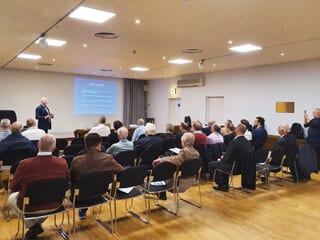
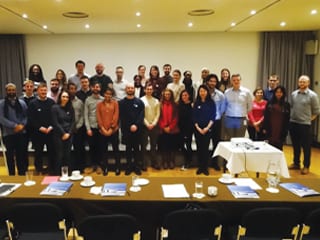
The latest Young Engineer Programme kicked off on the 8th January and was held at the same venue and time as the London branch meeting.  Bill Hedges gave an introduction to the programme, and a review of YEP 2018 was given by participants Caroline Allanach and Stephen Shapcott, all coordinated by Alan Denney.  This year there are 32 young engineers taking part, compared with 14 in 2018.  This is a clear indication that the industry is healthy and on a growth spurt.

The first talk was given by Dr Jane Lomas, and dealt with the “Basics of Corrosion” as the lead into the series of nine lectures throughout the year. The programme will culminate on 12 November when the YEP candidates will present their solutions to the case study at the London branch meeting at the Royal Overseas.

The young engineers then had time to talk to the established engineers attending the LB meeting over refreshments.

New Members during 2019

New Members

Welcome to our 216 new members and 15 Sustaining Company members who joined the Institute in 2019.

TOGETHER WITH THE CONGRATULATIONS of the Institute to all the following members who have attained Professional Status in 2019.

TECHNICIAN

• Toni Gordon
• Robin Isaac Wilson • Shaun Scholes • Craig McCann • Matthew J Grindrod • David Bellfield

PROFESSIONAL

• Mahmoud Hasan Daghestani
• Keith M Wagner
• Ricardo Ocampo Ramos
• Yousef Abdulrahman Obeid
• David Wright
• Bilal Ahsan
• Mahesh Panchal
• Man Mohan Waghey
• Syed Umair Niaz Bukhari
• Tarek Hamada Farghaly
• Barathkumar Krishnan
• Mohamed Saad Eldieb
• Emmanuel Alenkhe
• Ahmed Shafik Badawy
• Luigi Petrone
• Alaa Attia Abdel Razek
• Aqeel Ul Qadar Ahmed 
• Mohamed Mohamed Mukhtar
• Nigel Ratcliffe
• Jaison Wilson Lobo
• Thamizhanban Dhanapal
• Hugh P O’Neill
• Fahad Muhammad
• Ahmed Magdy Wahba Mahgoub
• Naveed Hassan
• Muhammad Umer
• Jonathan Wilmshurst-Smith
• Prakash Shanmugam
• Nigel John Owen
• Irving B Annan
• Agnieszka Knyter
• Mohammad Faraz Muslim
• Zuojia Liu
• Gregory Brown
• John Stephen Rae
• Ahmed Amin Abdel-
Rahman Ali
• Mahalingam Ganesan
• Santhosh Nagarajan
• Richard Barker
• Kevin Harold
• Tamer Ibrahim Ahmed Mohamed
• Danny Burkle
• Sherif Abdel Hamid Helmy
• Syed Sajid Ali Qadri
• Mohamed Fawzy Mohamed Omar
• Mustafa Hashim

FELLOW

• Nigel David Strike
• Kuppili Prabhakhara Rao • Mohammed A Al-Anezi
• Marcello Angelo Biagioli
• Emmanuel Marcus
• Basanta Kumar Lenka
• Aftab Fakhruddin Khan
• Yunnan Gao
• Joseph Itodo Emmanuel
• David Horrocks
• Richard Green
• Sarah Vasey

HON FELLOW

• David W Harvey

The President Writes …

The President Writes …

The President Writes

Shortly before Christmas, it was with great shock and sadness that I learned of the passing of Bill Cox, a former ICorr President and a highly valued and respected member of Council, at the age of just 69. Bill was a true stalwart of the Institute and it was fitting to see such strong ICorr representation at his funeral, where Stuart Lyon, Brian Wyatt and Wil Deacon spoke very movingly about their memories of Bill. On a personal note, I will greatly miss Bill’s friendship and support; he was the most honest and dependable person you could ever wish to meet and his passing is a huge blow to us all.

By now you will have seen the results of our Institute rebranding initiative, which has been applied to our website, magazine, documentation, stationery and marketing material. I would like to thank everyone who took the time to provide feedback via the online survey during the summer. Your comments were taken very seriously and I hope you will agree that MD Design Studio and Square One Advertising
& Design have done a fantastic job. The outcome will be to enhance how the outside world views the Institute and to emphasise our role as a vibrant professional society promoting excellence in corrosion science
and engineering.

It was a pleasure to attend the annual London Branch Christmas Luncheon at the Royal Overseas League on 5th December. The guest speaker was former cricket commentator Henry Blofeld (or ‘Blowers’), who kept us very entertained with anecdotes from his long career covering Test cricket all over the world. Alcohol and cake seemed to feature very strongly! As usual, the Luncheon was very well attended and can only be described as a resounding success; congratulations to the London Branch organising committee for another outstanding event.

I’m delighted to say that we have signed an agreement with the Society of Operations Engineers allowing them to take over the Registration of our CEng, IEng and EngTech members with the Engineering Council. Huge thanks are due to David Harvey and Bill Hedges for their efforts in securing this seamless transition from the now defunct Society of Environmental Engineers. If you had been holding off submitting an application while this was being sorted, now is the time!

On a related note, if you hold CEng registration through ICorr (or any other professional body) and would be willing to act as an applicant assessor or professional review interviewer for new applicants, we would love to hear from you! For more information on what this entails please contact David Harvey (d.harvey@cathproconsult.co.uk).

It has also been a time of change for our Cathodic Protection training courses, which have been completely revamped to align with the requirements of the ISO 15257 standard. This is entirely due to the sterling efforts of the Cathodic Protection Governing Board (CPGB), and in particular its Chair, Jim Preston, and CP Training Scheme Manager, Brian Wyatt. Jim and Brian have recently stepped down from these roles and I would like to thank them sincerely on behalf of the Institute for the huge amount of effort they have put in over the past few years. Their legacy is that we now have a world-class training offering that will raise standards in the industry, while safeguarding the financial stability of the Institute.

Finally, I would like to extend a warm welcome to new CPGB Chair, Chris Spence, new CP Training Scheme Manager, Robin Bailey, and new Surface Treatment Governing Board Chair, Keith Wagner. It’s great to see that our conveyor belt of talent and dedication is still functioning in these busy times. Your efforts are truly appreciated!

CED Working Day and Symposium on ‘Corrosion Control in Transport and Infrastructure’

Wednesday 29 April- The National Railway Museum

Institute of Corrosion’s Corrosion Engineering Division

SYMPOSIUM ON

‘Corrosion Control in Transport and Infrastructure’

This one day meeting will be the latest in a series of recent working days of the Institute of Corrosion’s Corrosion Engineering Division. The meeting will be held at the National Railway Museum, York. This year’s meeting is wide ranging and covers Corrosion Control in Transport and Infrastructure. After the talks, the meeting will break up into the individual CED working groups. In parallel there will be a chance to visit the railway museum. Where possible, agendas for the working group meetings will be published separately in advance on the CED web site (https://www.icorr.org/icorr-structure/). The 2020 Paul McIntyre Award will be presented after the morning lectures. This working day will be a good opportunity to network with other corrosion professionals from different industry sectors and to learn about some of the latest developments in the field of corrosion control in a variety of transport and infrastructure applications across diverse industries. For information on becoming involved with CED working parties please see the CED web site or contact the Chair of CED, Nick Smart (nick.smart@woodplc.com). For registration to attend the meeting, please complete and return the registration form.

Photo Competition – Win an Ipad and have your winning photo featured in the ICorr rebrand launch

Photo Competition – Win an Ipad and have your winning photo featured in the ICorr rebrand launch

The Institute of Corrosion rebrand launch is coming soon! This will involve rebranding of our website, stationery, documentation and marketing material.

To assist with this, we are looking for images that are people-focused and celebrate the people that make ICorr: the scientists, the engineers, the academics, the designers, the facility managers, the businesses, the students, the teachers. We’d also like to capture a wide range of activities, people out on-site working, people in labs, people inspecting, people networking, people meeting socially, people achieving accreditations and awards, people studying and training. In addition, rather than tired-looking images of rusty components, we’re looking for uplifting photos of pristine, gleaming infrastructure to emphasise that our members get things right!

Deadline for Entry

  • The contest is open to all with a final submission date of 14 February 2020.
  • Please send your photo(s) to admin@icorr.org. Please note that max email size shall be no more than 10 MB

Format and Submission

  • Images must be at least 300 dpi in their original format and submitted digitally as TIFF or JPEG files.
  • Minor digital enhancement (enhancing the color/light) is acceptable, but borders, frames, special filters, text, copyright, watermarks or signatures are not permitted.
  • Each uploaded image should include the name, description of activity / object, project name / project location and year the photo was taken.
  • ICorr reserves the right to remove any pictures from the contest that are deemed unsuitable.

Copyright

  • Do not submit images you do not own or did not take yourself or any images downloaded from websites.
  • By signing the official entry form and/or submitting an image electronically, you are stating that you are the owner and copyright holder of the image submitted and participants accept and agree to be bound by the rules and the decisions of contest judges, whose decisions are final.
  • Although photographers retain the copyright to their images, by entering them into this contest they permit unrestricted usage by ICorr, without receiving any fee or compensation. This applies to winning and non-winning entries.
  • You also represent and warrant that the photograph is your original work. If your photograph contains identifiable people, you are stating that you have permission from all of the models and have a completed photo release form in your possession.


Prize

  • Apple iPad.
  • Winning photo will be featured on the cover of the rebranded Corrosion Management magazine and on the landing page backdrop of the rebranded ICorr website.*

Other selected photos may be used in the new ICorr website at the discretion of ICorr.

Winning photo will be picked by a panel of ICorr judges.

* Duration of winning photo being the backdrop will be at the discretion of ICorr.


Deadline for Entry

Day(s)

:

Hour(s)

:

Minute(s)

:

Second(s)

Latest News – London Branch

Latest News – London Branch

A joint meeting with the Society of Chemical Industry (SCI) was held at their newly refurbished auditorium in their Belgravia HQ, on 26 September. The audience of over 70, included Professor Ken Grattan, OBE, FREng, who is the Dean of the graduate school at City University, London, and who agreed to give the vote of thanks.

The evening Chairman, John T O’Shea, introduced Dr Fred Parrett, Hon Treasurer of the SCI London Group, who gave the first presentation on the laying of the first Transatlantic Telegraph Cables.

The electric telegraph was first developed by Samuel F. B. Morse in 1832 who also developed Morse Code. Land based cables to use the telegraph soon followed, and within a decade, more than 20,000 miles of telegraph cable criss-crossed the USA, the UK and Europe. Trials of underwater cable were undertaken by Samuel Morse across New York Harbour in 1842 and Charles Wheatstone across Swansea Bay in 1844. In 1851 a cable crossed the English Channel.

The problems of laying a cable across the Atlantic were a greater challenge, not just the technical and logistical problems, but financing such a great undertaking. The first attempt in 1857 failed when the cable broke, and could not be recovered. New finance was arranged and in August 1858 they succeeded, when the first transatlantic telegraph message was transmitted. Unfortunately the cable failed after only three weeks, which was thought  to be due to breakdown of the cable insulation when voltages of a few thousand volts were used to try and speed up transmission speed.  It took another 7 years before new finance was arranged and improved cable designs were developed for the next attempt. For this Brunel’s ship the Great Eastern was acquired, the largest ship in the world at that time. In 1865 it almost succeeded, starting in Valentia Bay, Ireland it reached 600 miles from Newfoundland when the cable again broke. The final success came one year later in August 1866 when the cable finally crossed the Atlantic and permanent telegraph communication established. The 1866 transatlantic cable could transfer 8 words a minute, and initially it cost $100 to send 10 words, which translates to about $1,340 today, and was mainly used by the British and American governments and large corporations.

The second presentation was given by Trevor Osborne, a Past President of ICorr and a Past Chairman of London Branch, on 50 Years of Oil and Gas Offshore Corrosion Control Experience and Transfer of Technology to Offshore Renewables.

Development of offshore structure corrosion control methodology in the North Sea, and all around the world, has been on-going for decades, in fact close to 50 years and possibly longer in some parts. Given this long experience, corrosion engineers rightly considered that all aspects of barrier coatings and cathodic protection were honed to a fine art and as a result one system followed another with great success, in fact Trevor had been involved in many offshore structure designs with responsibility for painting, coating, CP, biocides, inhibitors and other aspects of corrosion control. However the fabrication and installation of new offshore structures for the oil and gas market has declined greatly and that work load has in part been replaced by the upsurge in renewable energy requirements. Specifically offshore wind generation in the form of monopiles, transition pieces and substation fixed jackets. All exposed parts of each structure need to be addressed from a corrosion perspective if the asset is to be protected and the lifetime met.

The presentation walked the audience through the period of time from early offshore structure design and construction for the oil and gas markets, to the painful transition to wind energy, including the attendant problems that have occurred along the way and what should have been an easy transformation but often times was not.

The first meeting at the branch’s new venue, the Lancaster Hall hotel in Bayswater, was held on 10 October.  Kevin Harold of Paintel Ltd gave a fascinating insight into the world of an Industrial Coating Applicator, taking a look at past, present and future practices in the industry. Kevin explained how the Industrial Coating Applicator Scheme (ICATS) has changed the view of Health and Safety and the concept of “slap it on and get out of here”, to ensure the work is compliant to the specification. He began his presentation by describing his journey as a painter from the era when PPE was non-existent, how he moved into industrial painting, became a painting inspector, and after joined the Tamar Bridge strengthening and widening project, found the painters could not apply coatings properly, so he began teaching them.

Even as late as the early 21st Century clients were not getting what they wanted in terms of standards or quality, and in 2006 after becoming aware of ICATS, registered his company, got his workforce trained and subsequently became a trainer himself. 

Kevin could see the enormous benefits of ICATS, notably the evidence that the training results in major savings from less repeat work and the advantages gained by the asset owners and operators, so he became an ICATS senior specialist trainer, and the current ICATS course material, launched in 2018, was written by him and his wife Jo.  He has also written the ICATS Supervisor course and the new Managers Coating Awareness course which provides an insight into coatings for specifiers and engineers.

Kevin finished his presentation by saying that a lot of asset owner operators are happier with the final product they get from ICATS accredited applications, and ICATS is now mandated by many companies.  The enormous impact of ICATS on the whole industry has yet to be completely realised and it’s now going global.

The January meeting will be held on Wednesday 8th at the Lancaster Hall hotel (note change from usual second Thursday for this month), when there will be a panel discussion on “Linings for Extreme Duty” with Dr N Miskin, DuraPol, and Michael Harrison, Sherwin Williams.