



Galloway Award 2018

Galloway Award 2018

The latest recipient is Mohamed Koronfel (Imperial College), for his work on “Understanding the reactivity of CoCrMo-implant wear particles”, published in Nature|Materials Degradation (doi:10.1038/s41529-018-0029-2)
The Galloway Award requires students to simply send a copy of a submitted or published paper from the previous 12 months, rather than a separate technical report. The student must be the primary author of the work and preferably first author.
CoCrMo alloys have been considered as an attractive material for orthopaedic implants due to their high wear and corrosion resistance. However, in practice, the release of millions of wear particles per patient annually led to high failure rates of CoCrMo Metal-on-Metal hip implants. These wear particles invoke an inflammatory response in the patient, where immune system cells (macrophages) are recruited to attack the wear particles. The inflammation comes with an associated severe pain that often leads to revision surgery and implant removal (failure). Due to the unexpectedly high failure rates, lawsuits were filed in both the UK and USA against the implants’ manufactures. Furthermore, due to unknown long-term effect of these wear particles, clinical risks to patients may manifest even long after revision surgery. The macrophage cells, where wear particles were typically found in vivo, create a harsh acidic, oxidising environment which may lead to the release of potentially toxic and carcinogenic metal ions.
A number of studies characterised the state of wear particles inside macrophages in periprosthetic tissue (accessible after implant removal during revision surgery). Although CoCrMo alloys are nominally an extremely stable material and contain very high levels of Cr (Co 60 % : Cr 30 % : Mo 7 %), the post-surgery wear particles were composed mainly of Cr and only trace amounts of Co. This high-level of Co dissolution is unexpected given the alloy’s stable Cr-rich passive film. Studies on periprosthetic tissue after implant failure provide little insight into the dissolution stages and exposure history imposed on wear particles in vivo. In order to understand the in vivo reactivity of wear particles, in situ monitoring of their chemical and physical changes in simulated biologically relevant conditions was carried out, using X-ray absorption spectroscopy and transmission X-ray microscopy at synchrotron-radiation facilities, which provide high chemical sensitivity and in-situ measurement capabilities.
This work highlights the potential reaction mechanisms that would not have been evident from the required regulatory testing regimes. Additionally, the work demonstrates the potential of synchrotron-based approaches to provide dynamic chemical information on nanoscale systems under practical conditions.

60th Corrosion Science Symposium (CSS)

60th Corrosion Science Symposium (CSS)

As previously announced, this will be held on 26th-28th August 2019, as part of Electrochem 2019 at the University of Strathclyde, organised jointly with the Universities of Strathclyde (Prof. Sudipta Roy) and Glasgow (Dr Mark Symes).
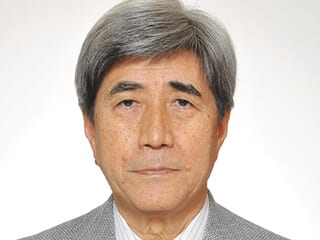
Professor Tetsuo Shoji will receive the UR Evans award 2019 at this Symposium for his outstanding contributions in the broad aspects of corrosion science and engineering. His research field covers the Physics and Chemistry of Fracture, combining mechanics and chemistry that is necessary for the analysis of materials degradation and fracture mechanisms, as an extension of material strength and fracture mechanics. For example, one of the factors degrading the safety and reliability in structures and components is crack initiation and propagation under the influence of chemical environments, and its mechanistic understanding is of extreme importance. His work has been key in the development of better instrumentation and analysis, particularly in the :
n Development of a recrystallization-etch technique and a unique evaluation procedure for crack tip intense strain region, by which ductile fracture could be quantitatively analysed.
n The unique formulation of stress corrosion crack growth rate, based on a mechanistic understanding of crack growth under a mechano-chemical reaction at a crack tip. Thereby the first to establish a predictive capability of growth rate of stress corrosion cracking, taking into account both crack tip mechanics and chemistry, and;
n Establishment of a predictive model and a capable procedure for aging degradation evaluation of plant components in energy conversion systems such as fossil and nuclear power plants and plant life time prediction and management.
Also from his varied original work, he contributed to the setting up the Centre of Excellence for Physics and Chemistry of Fracture, focusing on mechano-chemical phenomena and its relevance to failure in the field of operating plants. He is one of the pioneering leaders in this research field and has published more than 500 journal papers covering atomic scale simulation of oxidation, hydrogen accelerated oxidation, mechanism-based alloy design, electrochemical materials characterization, mechanistic study of oxidation, non-destructive testing and evaluation and fracture mechanics and failure analysis.
Tetsuo Shoji served as a Professor of Tohoku University from 1986 until March 2018. He was honoured as a Professor Emeritus of Tohoku University in 2015. Currently, he is continuing his research work as a Senior Research Fellow of New Industry Creation Hatchery Center (NICHe) of Tohoku University. He is also a Distinguished Professor of the National Centre for Materials Service Safety, University of Science and Technology Beijing, USTB in China since 2013, and High -level Foreign Professor of Institute of Disaster Management and Reconstruction of Sichuan University since 2018.
Prof Shoji was a postdoctoral fellow working for Professor R.N. Parkins at the University of Newcastle upon Tyne, and a Visiting Professor at Massachusetts Institute of Technology. He was the principal investigator of various national and international programmes, such as the Centre of Excellence Programme on Physics and Chemistry of Fracture and Failure Prevention, the Co-Director both of CNRS LIA ELyT laboratory and the international Joint Laboratory of Tohoku University and USTB, and international cooperative research programme of PEACE and POLIM, working on mechanics and mechanisms of Environmentally Assisted Degradation such as SCC and Environmental Fatigue. He has received 20 national and nine international awards, including the NACE W.R. Whitney Award in 1998, the Lee Hsun Award in 2006, Chinese Academy of Science and the Great Medal from CEFRACOR, France in 2016. He was appointed by the Prime Minister as a Council Member of Science Council of Japan in 2011 for seven years and was elected as a Member of Science Council of Japan in 2018 for six years and also elected as a member of the Japan Engineering Academy.

Corrosion Engineering Division (CED)

Corrosion Engineering Division (CED)

This year’s Paul McIntyre award is going to Steve Paterson, and he will be presented with this at the up-coming Electrochem 2019 Conference being held at Strathclyde University, Glasgow.
Steve Paterson obtained a B.Sc and Ph.D in metallurgy from Imperial College, London. His Ph.D thesis investigated the mechanical and microstructural properties of aluminium alloys during indirect extrusion. He joined Shell International, and over 34 years had an exciting journey in a variety of roles involving materials, corrosion, welding and integrity management. His experience covered the research, refining, chemical and oil & gas production sectors and he worked in the UK, Netherlands, Norway and Malaysia.
Since retiring from Shell in 2017, Steve has worked as an independent consultant and is currently a part-time lecturer at Robert Gordon University where he teaches materials & corrosion, and corrosion management. His involvement in academia includes his role as Chair of the Imperial College Materials Advisory Board, and he is an adviser to the Shell-Imperial AIMS centre which was set up to develop new insights into materials behaviour particularly surface interactions at the nano-scale. He also provides training in corrosion prediction and corrosion management for Shell, and he will soon start to deliver an industry course on Corrosion under Insulation.
He was a member of the Energy Institute Corrosion Management Committee from 2006 to 2014, including Chair, and during this time was directly involved in the development of the industry guideline publications for Corrosion Management and for External Corrosion Protection. His involvement with EEMUA (Engineering Equipment and Materials Users Association) since 2003 resulted in the continuing development of the subsea materials & corrosion control guidance publication (EEMUA 194 – now at Rev.4), and the delivery of the associated training course since its inception in 2008. He co-authored the EEMUA 218 publication for quality requirements for the manufacture and supply of duplex stainless steels, and subsequently provided input to the ISO 17781 standard for testing of duplex stainless steels.
During his time at Shell he was responsible for the development of graduate materials & corrosion engineers, and from 2006 to 2017 was involved in the mentoring of over 50 young engineers. He used this experience to help the Institute of Corrosion develop its C.Eng competence matrix in 2017.
He has been a regular attendee at Eurocorr conferences where he first met and got to know Paul McIntyre. From 2013 until 2017 Steve was the Chair of Working Party 13 of EFC for Oil & Gas and was responsible for their conference programme, which he tried to ensure was a good balance between academic and more practical papers. He has written 30+ technical papers or presentations and has been a regular contributor at conferences, seminars and industry meetings, including NACE, EFC (Eurocorr), SPE, Marine Corrosion Forum and Institute of Corrosion branch events. He maintains his interest in technology development through his position on the review panel for the Oil & Gas Innovation Centre (OGIC) in Aberdeen.

From the Editor

From the Editor

I would also hope you are all enjoying the good weather, however as the President said, corrosion doesn’t stop. This is also the major maintenance painting season, but high temperatures and humidity are not the most suitable for blasting and painting activities, and I hope to cover this topic in the next issue of the magazine.
This month there are three articles on different topics in our industry. Brian Wyatt discusses the reliability of CP reference electrodes installed along a buried pipeline, and Bijan Kermani reviews the corrosion problems associated with the up-coming underground coal gasification process. Finally there is a case study highlighting a potential problem during hydrostatic pressure testing of a hydrocarbon storage tank.
Remember if you have any suggestions for future articles, or wish to submit a technical article, please contact me at brianpce@aol.com.
Brian Goldie, Consulting Editor

Paul McIntyre Award; 2019 Recipient – Dr. Steve Paterson

Dr. Steve Paterson

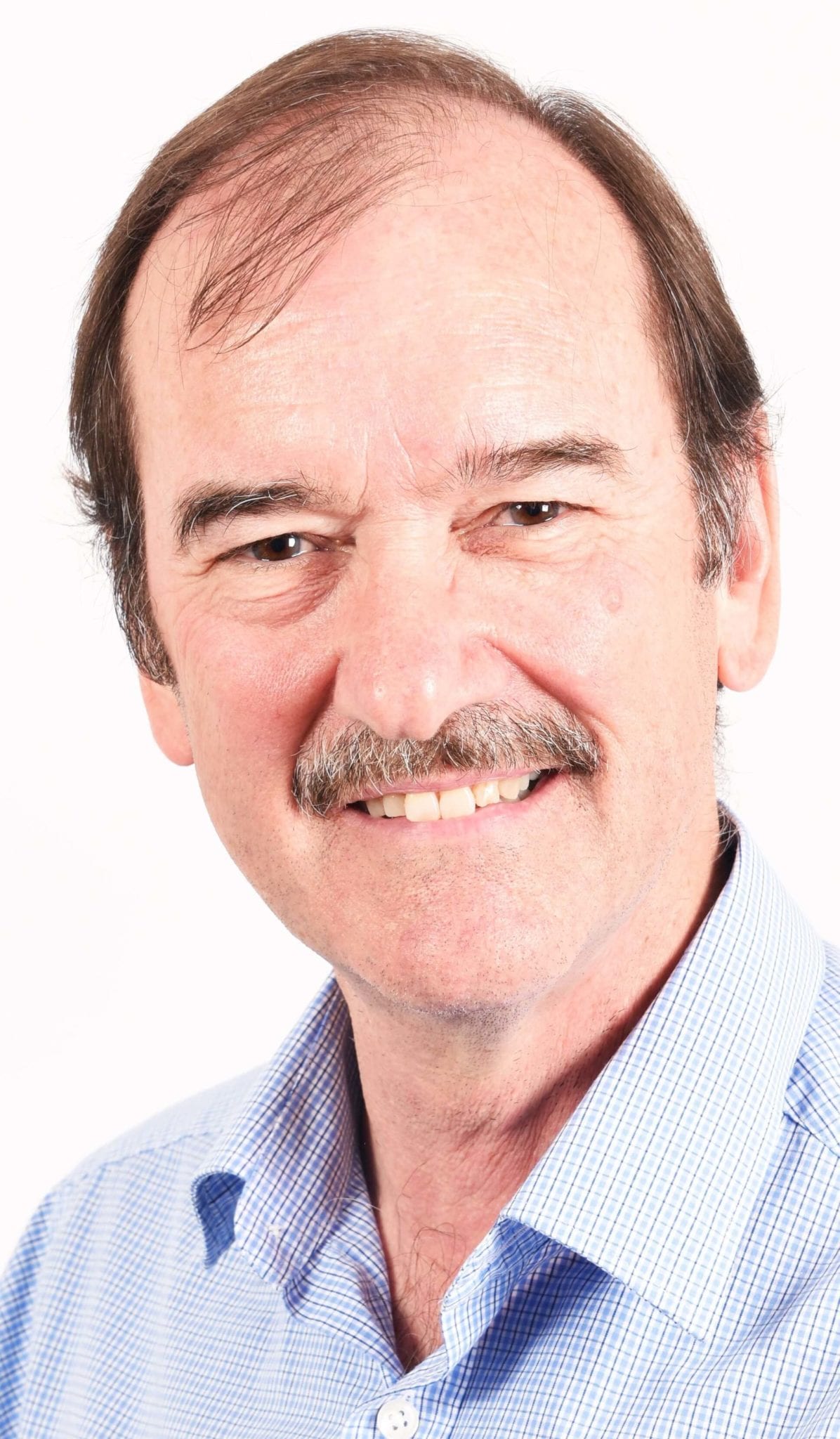
The 2019 Paul McIntyre award has been granted to Dr. Steve Paterson.  Steve obtained a B.Sc and Ph.D in metallurgy from Imperial College, London. He joined Shell International and over 34 years had an exciting journey in a variety of roles involving materials, corrosion, welding and integrity management. His experience covered the research, refining, chemical and oil and gas production sectors and he worked in the UK, Netherlands, Norway and Malaysia. Since retiring from Shell in 2017 Steve has worked as an independent consultant and is currently a part-time lecturer at Robert Gordon University where he teaches materials and corrosion, and corrosion management. The award will be presented at the Electrochem 2019 conference at Strathclyde University on Wednesday 28 August, 2019, during the Corrosion Engineering Division part of the meeting.

The Fundamentals of Corrosion Course September 2019

The Institute of Corrosion is running a Fundamentals of Corrosion course presented by Dr Jane Lomas at the Institute of corrosion office at Corrosion House 5 St Peters Gardens Marefair Northampton on the 23rd – 27th of September.  The course will be based on practical information and hands-on examples as well as relevant background theory.   Attendees on the course will be given a wide ranging introduction to all the major aspects of corrosion engineering.

Successful completion of the course and the associated examination will required for obtaining Professional membership of ICorr for those without either formal qualifications in corrosion or the relevant time experience.

Who is the course for:

The course will be suitable for engineers, paint inspectors, designers, technicians and scientists wishing to expand their career opportunities into the corrosion field or wanting to broaden or refresh their knowledge of corrosion in general.

Civil, mechanical, chemical and naval engineers will find the course aids their ability to assess potential or actual corrosion situations and to be able build anti-corrosion measures and strategies into their projects.  It will also help to understand the mechanisms and causes of common premature failures.

The course will take place over a 5 day period in a classroom format; four days being talks and practical sessions and the fifth day being a short review and the examination.  There will be opportunities to ask questions at all times during the course.

Course Content:

The course will include:

  • Corrosion of common metals.
  • Basic corrosion science.
  • Common corrosion mechanisms; galvanic, crevice, pitting, deposition, corrosion under deposit/lagging, stress corrosion and cracking.
  • The electrochemical series and its practical uses.
  • Methods for preventing or managing corrosion, including Inhibitors/passivation.
  • Introduction to cathodic protection.
  • Surface preparation challenges, paints & coatings.
  • Corrosion and environmental conditions.
  • Material selection & design.
  • Corrosion testing and monitoring.

Course Presenter:

The course will be presented by Dr Jane Lomas (FICorr).

Jane is an experienced corrosion & coatings engineer at Amtec Consultants Ltd with a multi-disciplinary background. She has over 30 years practical experience of marine corrosion and building coatings issues, from project design, through new building to guarantee claims; ongoing coating maintenance problems and repair issues.

She also works on a global basis with failure investigations and product liability claims in the automotive, industrial, aerospace and water treatment industries as an investigator and problem solver.

Jane manages multi-company projects for both R&D purposes and claims cases and also runs the laboratory at Amtec.

  • Fellow – Institute of Corrosion (FICorr)
  • Honorary Secretary, Trustee and Council Member of ICorr.

Further information on the course can be obtained from the Institute of Corrosion: admin@icorr.org or david@icorr.org