The third article in this series from ICorr Fellows who have made a significant contribution in the field of corrosion is by Bill Hedges, Vice President of the Institute of Corrosion, FICorr, FRSC, FNACE and CEng.
Corrosion Monitoring and Inspection
Corrosion monitoring and inspection are essential components of a corrosion management programme and numerous books, papers and conferences are dedicated to these subjects. This article focuses on some key points of these activities and the reader is encouraged to review the literature for more detailed information.
To minimise safety, environmental and business risks whilst maximising reliability, it is essential that equipment is maintained in a condition appropriate for the service required. Equipment in this condition is described as Fit-for-Service (FFS), i.e. the equipment can operate safely under defined operating conditions for a defined operating period. It should be noted that equipment that is FFS does not have to look nice or be corrosion free – although that is often desirable for other reasons! Corrosion is one of many possible degradation mechanisms that can negatively impact the condition of equipment and ultimately render it not FFS. Corrosion monitoring and inspection are used to determine if equipment is FFS and to predict how long it will remain so.
The definitions of corrosion and inspection can become blurred but broadly inspection involves quantifying the safe, usable wall thickness of metallic equipment and identifying defects such as thinning, cracking or pitting, caused by corrosion. Inspection is usually the most accurate way to determine current equipment condition but has the obvious disadvantage that any damage that is detected has already occurred. Inspection is therefore a lagging indicator.
To complement inspection methods, a leading indicator is needed; something that will identify that degradation is occurring and provide enough warning so that an intervention can be implemented well in advance of the problem impacting FFS. In practice a true leading indicator is difficult to obtain but this is what corrosion monitoring strives to do.
For both corrosion monitoring and inspection it is critical that the correct locations are selected. This requires a full understanding of the corrosion threats, the probable corrosion rates and the consequence of failure, i.e. a risk-based approach.
Corrosion Monitoring
Historically corrosion monitoring was exclusively associated with the measurement of corrosion rates. However, this definition has been extended to include the measurement of the performance of corrosion control barriers, e.g. the availability of corrosion inhibitors, the condition of coatings, or the electrical potential of equipment under cathodic protection control.
Corrosion Rate Monitoring
In broad terms corrosion rate monitoring is the measurement of a representative corrosion rate for a given piece of equipment exposed to a corrosive service. There are several techniques that can be used either as standalone or in concert with each other. Ideally corrosion monitoring is designed to provide real time feedback on the corrosion control process. It is important to remember that any given monitoring technique will have limited accuracy and sensitivity, and should be chosen to provide appropriate information. Monitoring is used for corrosion on both internal and external surfaces, but for this article only internal monitoring is discussed. Traditional methods for internal corrosion monitoring include:
i. Mass (weight) Loss Coupons.
ii. Electrical Resistance (ER) Probes.
iii. Electrochemical Monitoring (e.g. linear polarization resistance (LPR), AC Impedance).
Clearly there is a cost to installing and running corrosion monitoring programmes and this needs to be balanced against the value that they will provide. For probes, the ideal situation is to have them hard wired or wirelessly connected into the equipment control system which is best done during design and construction.
There can be a significant operating cost to manage coupons and probes which obviously depends on the size of the programme. Insertion and retrieval of coupons and probes into pressure containing equipment may present safety risks and must be done by specially trained personnel. Analysis of coupons requires laboratory facilities and the analysis of data requires appropriate training. These contribute to the cost of the programme and so the value of the data must be carefully considered. Monitoring data should never be considered as simply nice to have. If the data are not actively used and acted upon it begs the question of why invest in the expense and effort of installing corrosion monitoring facilities.
Corrosion Barrier Monitoring
To reduce corrosion rates to an acceptable level, corrosion engineers use a variety of mitigation methods known as barriers. These fall into two broad categories as follows:
i. Passive Barriers: these are barriers which require little or no active management during the lifetime of the equipment, e.g. the use of a material that is resistant to corrosion in the specified fluid.
ii. Active Barriers: These are barriers that require active management by corrosion engineers. This can range from periodic visual inspection to monitor the condition of paint coatings to daily adjustment of corrosion inhibitor injection pumps.
It should never be assumed that because a barrier has been installed it will always work as designed. Where active barriers are employed it is essential that their performance is monitored to ensure they continue to perform as designed over the lifetime of the equipment. This is known as corrosion barrier monitoring, i.e. a corrosion monitoring programme is not just about measuring corrosion rates.
A good corrosion management programme will have at least one barrier in place for each credible corrosion threat and each of these barriers should be monitored to ensure they are working as designed.
Inspection
The majority of inspections are carried out using well-established techniques that have been available for many years, i.e. Visual Testing (VT), Ultrasonic Testing (UT), Radiography Testing (RT), Magnetic Particle Testing (MT) and Dye Penetrant Testing (PT).
Many of these techniques have been built into both internal and external tools, e.g. intelligent (smart) pigs, drones and subsea remote operating vehicles (ROVs).
Many inspection instruments are now small enough such that they are truly portable and can be handheld by a single person. Inspection equipment can also be permanently installed on facilities to provide point measurements at known defects or more extensive, circumferential or longitudinal coverage. Another important development is the increased use of remotely controlled crawlers and drones which can carry cameras to locations that are difficult or costly to access, such as subsea pipelines, flare stacks and offshore platform jackets.
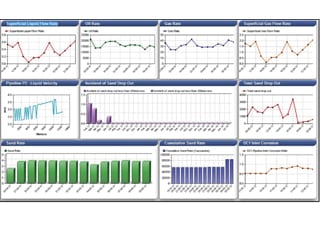
An example of a Corrosion Management Dashboard.
An important development in radiography is the widespread use of digital radiography which uses electronic detectors instead of traditional film plates. The resolution of the digital “plates” provides very high-quality images with each pixel offering 250µm resolution. The high sensitivity also allows either lower strength radiation sources to be used or shorter exposure times. In addition, modern data processing provides very fast data acquisition and analysis of images which allows the images to be seen in almost real-time.
Collection and Analysis Data
Following data acquisition by corrosion monitoring and inspection, it is paramount that the data are stored, analysed and interpreted.
Real-time transmission of corrosion data from electrically based monitoring (e.g. ER, LPR, oxygen probes) has been available for many years although it required the installation of hard wiring from the probe to a control centre. In recent years there have been significant advances in the availability and reliability of wireless communications. This has enabled data to be transmitted relatively inexpensively from corrosion monitoring locations in real time.
Many companies provide software that can take multiple data inputs and correlate them with the corrosion monitoring data. As an example, taking temperature, pressure and flow rate data from a pipeline to estimate an unmitigated corrosion rate. These data are then presented in a corrosion dashboard which can be seen at any location around the world. The above figure shows a typical dashboard that displays real time fluid flow rates, velocities, sand rates and estimated corrosion rates.
Future Considerations
Inspection techniques can measure equipment wall thicknesses very accurately but historically they have required skilled technicians to make the measurements using portable equipment. The cost of this has meant that repeat inspections were undertaken at a frequency of 1-5 years. However, with improvements in technology, the use of permanently installed inspection equipment has blurred the boundary between what was traditionally referred to as Inspection and Monitoring, and the use of inspection techniques as ‘real-time’ corrosion monitoring tools has become more common.
These non-intrusive, highly sensitive technologies are able to work through solid external coatings (e.g. FBE, PE, 3LPP). They are increasingly becoming the preferred methods for corrosion monitoring going forward and offer the option to eliminate intrusive monitoring and the risks associated with it.
Guided wave UT is increasingly being used to monitor long lengths of piping and pipelines. It is probable that these techniques will be used to provide close to 100% coverage of equipment to provide real time measurements at all locations. This would be a key step towards intelligent equipment which self identifies problems.
Corrosion monitoring and inspection programmes can generate large volumes of data which are often reviewed in isolation. There have been significant advances in data analytics (so called “Big Data”), artificial intelligence and machine learning. These technologies can rapidly analyse vast quantities of structured (e.g. data) and unstructured (e.g. reports) information to provide insights that may have been missed.
Finally, engineers and technologists continue to find new and improved methods for monitoring and inspection. Perhaps one day corrosion may be eliminated but until then it is certain that better methodologies for monitoring and inspection will continue to appear.
ICorr’s Young Engineer Programme once again broke new ground as it held its first ever meeting online in May, for the reveal of its 2020 case study.
The grand surroundings of the Royal Over-Seas League might have been replaced with the homespun comforts of participants’ living rooms, but the content of the meeting remained as topical as ever with Steve Paterson from Arbeadie Consultants Ltd presenting the 2020 case study for the seven participating groups.
Focusing on an onshore titanium pipe corrosion failure, Steve described a scenario where several leaks were experienced in the piping at an onshore glycol desalination plant that required further investigation, giving the participants plenty to think about ahead of presenting their findings in November.
As an experienced technical expert with a deep knowledge of subsea engineering and corrosion management systems, Steve’s puzzling scenario ensured that the 32 participating young engineers – representing 19 companies, each with a wide and interesting variety of specialist backgrounds – had plenty to discuss on the evening.
The young engineer’s broad set of specialities include mechanical and materials engineering, welding, materials and more. These were all put to the test when discussing the desalination plant, which is used to periodically remove the salts from mono-ethylene glycol, used for hydration and corrosion control in gas pipelines from three offshore fields.
With the help of a mentor assigned to assist each group, the young engineers were posed with problems at the end of the presentation. These included proposing root causes for the defect, how to perform a corrosion risk assessment to determine if the plant is safe to operate, suggesting alternative materials, and identifying what mitigation options could be applied to prolong the service life of this section of the desalination plant, among others.
The YEP has been running for a number of years and delivers a technical competency framework that’s consistent with the Institute of Corrosion’s professional standards, to help prepare graduates for entry into the industry with a broad range of knowledge. As well as providing an opportunity to network with likeminded professionals, the programme also offers participants a stepping stone into the industry, and is the first stage in achieving MICorr and CEng status.
In what might be the first of many online meetings, the evening ran according to schedule, although participants and guests had to make their own tea and coffee during the scheduled break. Prior to that though they were entertained by Tim Evans, Caroline Allanach and Danny Burkle who offered a reflection on their 2018 winning case study.
Caroline and Danny discussed how they approached the case study and the fantastic resulting prize of a trip to the 2019 NACE Conference in Nashville, while Tim provided a critical assessment of their reaction and solution to the failure that occurred.
The case study was concluded by a series of questions and answers, before Trevor Osborne from Deepwater Corrosion Services brought the first ever online YEP meeting to a close with a message of thanks. The participants will attend four more lectures before reconvening in November to present their case study.
As with other Institute of Corrosion meetings, the branch’s March and April technical presentations had to be cancelled due to the pandemic. The committee held an online meeting under its new chairman, Ben Moorhouse of BP, to discuss how to move forward under the current situation. The committee would like to thank Paul Brooks the outgoing chair for the hard work he put into the branch during his tenure. Contingency plans were discussed to hold a replacement Annual General Meeting and next season’s regular talks (October onwards) via online video conferencing, if they cannot be held in person. Further information will be available in later issues of this magazine, and on the Institute website.
Breaking through to realities of cathodic protection
As we’ve described in our previous two articles an introduction to cathodic protection – discussing electrochemical corrosion and how cathodic protection works – cathodic protection is a highly effective method to prevent corrosion. It is used in multiple industries and environments, and without it the cost of corrosion on society, the economy and the environment would be far worse.
In this final article in the series, we dismantle seven common myths about cathodic protection.
Cathodic Protection Myth #1: Cathodic protection protects the whole structure, even if some of it is above the ground.
Reality – There is NO effect at all on the atmospheric corrosion of the piles, columns and beams above ground.
Cathodic Protection Myth #2: Cathodic protection on ONE side of a vessel (pipe/tank/lock gate) can protect both the inside and outside of the structure.
Reality – There is NO effect on corrosion on the other side of the vessel, unless there are holes that allow some cathodic protection current to flow in a common electrolyte from one side to the other.
Cathodic Protection Myth #3: If a buried pipeline is suffering from AC corrosion (AC induced from power transmission lines) it needs more CP to protect it.
Reality – NO! Don’t do it! NO! AC corrosion is complex, and an increased cathodic protection current density and more negative pipe/soil potentials will only enhance the risk of AC corrosion.
Cathodic Protection Myth #4: If I reverse the polarity of my impressed current cathodic protection system, I can pass more current. This must be better.
Reality – This has been done and proved to be incorrect. The structure supposedly being protected becomes the anode, and is consumed at around 10kg per amp per year. Entire sections of pipelines have been destroyed in this way.
Cathodic Protection Myth #5: You can reverse the current with a galvanic anode system.
Reality – In normal situations this is NOT possible. At elevated temperature there can be a reversal between zinc anodes and steel, but only if there are no chlorides present.
Cathodic Protection Myth #6: Galvanic anode CP systems are fit and forget.
Reality – If only this were true! All cathodic protection requires inspection and testing to determine if it is still functional and effective.
Cathodic Protection Myth #7: Galvanic anodes can only deliver a short design life.
Reality – It is normal for offshore structures to be well protected from immersed corrosion for more than 30 years by using aluminium alloy anodes. The early BP Forties platforms in the deep northern North Sea were protected for 40 years with a combination of coatings and large zinc anodes.
The challenges of using cathodic protection
Cathodic protection is used extensively to protect critical infrastructure from corrosion. Common uses include:
Oil and gas pipelines
Oil and gas storage facilities
Offshore oil, gas and renewable energy structures
Ships
Reinforced concrete in bridges and other structures
However, cathodic protection is a specialised area, requiring application of corrosion science, electrochemistry, electrical engineering, metallurgy, and, often, structural and mechanical engineering.
The standards (BS EN and BS EN ISOs), that cathodic protection professionals must work to, all make it clear that cathodic protection design must be undertaken by cathodic protection specialists who have a documented and appropriate level of competence.
BS EN ISO 15257 details the competencies that are required in all sectors of cathodic protection (buried, marine, steel-in-concrete, and internal). This standard also details the work that should be undertaken by cathodic protection Data Collectors or Testers, Technicians, Senior Technicians and Specialists or Engineers. Only personnel with appropriate levels of training, experience and competence can undertake work associated with cathodic protection:
Surveys
Designs
Installation
Testing
Commissioning
Performance assessment
Maintenance
In the UK, certification in accordance with ISO 15257 is increasingly required.
Here’s one final myth that must be exploded:
Bonus Cathodic Protection Myth: There are graduate and postgraduate courses in cathodic protection engineering.
Reality – No, there aren’t! So how do you get the training and certification you need, either for your employees or as an independent cathodic protection specialist?
Breaking the catch 22 in cathodic protection training
It sounds like something of a catch 22, doesn’t it? You must be certified to work with cathodic protection engineering, but there are no specialist courses for graduates or postgraduates. Consequently, specialists may start with a degree in science or engineering – or perhaps an apprenticeship – and then take advantage of specialist training. The Institute of Corrosion offers both courses and certification in cathodic protection.
Our cathodic protection courses are perfect for companies that need their staff trained and certificated in cathodic protection, for independent specialists, and for managers who want a better understanding of what their employees and contractors in cathodic protection should be doing.
These courses provide all the training required (levels 1 to 3) by cathodic protection data collectors, technicians and senior technicians in the sectors of buried, marine, and steel-in-concrete cathodic protection.
In addition, we offer independent assessment of competence as defined in BS EN ISO 15257.
If you are a cathodic protection company or an independent cathodic protection specialist, training and certification from the Institute of Corrosion provides recognition of training, knowledge, skills, experience and expertise that is valid internationally. As the industry continues to become more regulated and standards-led, this recognition will enhance your reputation and work opportunities.
Pictured: Adam Lea-Bischinger, CEng CMgr MEng CMRP Eur Ing, Snr. Consultant with Fokus – Reliability and a Specialist in Asset Management and Performance Improvement.
The branch held its 7th event of the 2019/2020 session, on 27 April. This was the first of 5 technical presentations of the annual joint Institute of Corrosion/MCF (Marine Corrosion Forum) programme, held Online this year over 5 days, due to the COVID crisis. The heavily over-subscribed webinar was jointly chaired by Phil Dent (MCF) and Stephen Tate (ICorr-ABZ) with Lewis Barton (MCF) as webinar manager and with Dr Yunnan Gao (ICorr-ABZ) and Institute of Corrosion HQ jointly promoting.
The branch was very pleased to host Adam Lea-Bischinger, a Snr. Consultant with Fokus – Reliability, who currently holds several roles in Aberdeen including, Branch Chair of IAM – Institute of Asset Management, online course tutor in Asset Management for the University of Aberdeen, and Snr. Advisor to the Board of Pavan Asset Value Managers.
Adam has 15 year’s experience working in maintenance, reliability, asset management and inspection covering major oil and gas, power, mining and infrastructure projects worldwide, and holds a masters degree in Engineering, Materials and Corrosion with post graduate training in Inspection and NDT.
Adam spoke enthusiastically on asset management and how it can deliver value to an organisation. He carefully described the six core elements of asset management, the work of IAM, and the development and roll-out of ISO 55000:2014 which defines terminology, requirements and guidance for implementing, maintaining and improving an effective asset management system, and gave examples of UK and overseas companies operating the ISO 55000 system, including many utilities, major transport operators and drilling companies, who all having significant investments to protect and maintain for their full life-cycle.
The now established standard has three key parts:
ISO 55000 – Asset Management – Overview, Principles and Terminology
ISO 55001 – Asset Management – Management systems – Requirements
ISO 55002 – Asset Management – Management systems – Guidelines for the application of ISO 55001
According to the IAM, “These three international standards are important not only for their content, but because they represent a global consensus on what asset management is and what it can do to increase value generated by all organizations.”
The conceptual model, developed by IAM to show the core elements of the ISO 55000 series standard containing six main groups and thirty nine subjects is detailed below:
• Asset Information • Asset Information Strategy • Asset Information Standards • Asset Information Systems • Data & Information Management
• Decision Making • Capital Investment Decision Making • Operations & Maintenance Decision Making • Lifecycle Value Realisation • Resourcing Strategy • Shutdown/Outage Strategy
• Risk & Review • Risk Management • Contingency Planing • Sustainable Development • Management of Change • Asset Health Monitoring • AM System Monitoring • Management Review • Asset Costing & Valuation • Stakeholder Engagement
The importance of team-working and good communication was heavily stressed, so as to achieve good LOF – Life of Field Design, and to avoid the too often prevailing SILO (compartmentalised) type mentality within organisations.
An extensive Q&A followed with questions on topics such as the use of ‘Hands-Free’ asset management software, conditioning monitoring, cyber security threats from wireless devices, and the management of ‘Late Life’ assets. Various aspects of implementation of ISO 55000 guidance were also discussed and highlighted global differences in asset management methods and regulation.
Following from the success of the April webinar with MCF which had an attendance exceeding 70 on all 5 days, it is now planned that the Institute of Corrosion will work together with MCF to continue the close co-operation now established, for its July meeting, in Birmingham, with webinars running between 6-10 July 2020, as the resumption of ‘Face to Face’ meetings is not being expected before that date.
On the 29th April, members of the Aberdeen Branch also participated in the online CED Working Day and Symposium on ‘Corrosion Control in Transport and Infrastructure’, with Alistair Seton of the Aberdeen Committee chairing the Oil and Gas Working Group.
There has been much debate of late concerning the impacts of the coronavirus outbreak, but both the Institute of Corrosion/MCF Webinars and the CED Online event, has proven beyond doubt that such obstacles can be overcome and that the demand for corrosion learning by whatever method, is as strong as ever.
As usual. full details of future branch events can be found on the ICorr Website, or by contacting: ICorrABZ@gmail.com. Copies of the majority of past branch presentations can be found at: https://sites.google.com/site/icorrabz/resource-center, and a photo gallery for all Aberdeen events may be found at: https://sites.google.com/site/icorrabz/event-gallery.
It should be noted that the planned Aberdeen event of Tuesday 23 June – ‘Industrial visit (Oceaneering), an Alternative / Interactive Industrial Event’, is currently postponed (awaiting Scottish Government instructions), with a new date to be advised, as soon as is possible.
We use cookies to optimize our website and our service.
Functional
Always active
The technical storage or access is strictly necessary for the legitimate purpose of enabling the use of a specific service explicitly requested by the subscriber or user, or for the sole purpose of carrying out the transmission of a communication over an electronic communications network.
Preferences
The technical storage or access is necessary for the legitimate purpose of storing preferences that are not requested by the subscriber or user.
Statistics
The technical storage or access that is used exclusively for statistical purposes.The technical storage or access that is used exclusively for anonymous statistical purposes. Without a subpoena, voluntary compliance on the part of your Internet Service Provider, or additional records from a third party, information stored or retrieved for this purpose alone cannot usually be used to identify you.
Marketing
The technical storage or access is required to create user profiles to send advertising, or to track the user on a website or across several websites for similar marketing purposes.