London and Aberdeen Branches Present More Events Online
The world may be in a state of continual flux and debilitating coronavirus restrictions, but there are some things you can rely on. One of those is the Institute of Corrosion, which continues to bring conferences, events, and meetings to your digital device.
Following the success of our online events earlier in the year – such as the Week of Webinars – we have news of two further online events. These are corrosion conferences that you will not want to miss. Read on to learn more, including how you can participate from anywhere in the world.
London Branch ICorr Meeting Goes Virtual
The London Branch of ICorr has announced its first ever virtual branch meeting. This is an evening event, starting at 6pm UK time (7pm CEST) on Thursday 8th October 2020, and will be a joint meeting with the London Materials Society (LMS).
This technical session will deliver a case study under the title ‘A New CP Approach on Non-Isolated and Aged Pipelines’. The presenter is Pablo Merino, Cathodic Protection Technical Authority @ CLH PS.
Here’s the premise:
An aged pipeline
An oversaturated CP System NOT achieving full extent protection criteria
An in-line corrosion inspection showing several corrosion features and a deficient coating condition
In some locations the coating is non-existent
Questions that must be answered include:
What can we do?
How we can progress from this situation?
This is a real case. It’s a big dilemma, and there are several options available. All need to be assessed before the most feasible solution from both a technical and economical perspective can be selected.
By the end of this meeting, we will have discussed all the possibilities and shared the solution. It’s an amazing ‘learn from the expert’ event.
To attend, click the link below to register. You will then receive login details and the ‘rules’ for this online meeting. (Oh, and don’t forget, there is one thing we can’t supply – drinks and snacks for the event. Yes, the London Branch is famed for its refreshments, but this time they are down to you.)
The Marine Corrosion Forum (MCF) and ICorr Aberdeen Branch follow on from their well-received and attended April and July ‘Week of Webinars’, with another five days of online lunch and learn events between 5th and 9th October 2020.
Here is the week’s schedule, with detailed abstracts. Each lunchtime session starts at midday and runs for an hour. And each is FREE. You can register for one or all events by visiting:
A history of well integrity in the operations phase and its business impacts to the oil and gas industry
Presented by Simon J. Sparke, International Well Integrity Ltd.
5th October 2020, 12:00 PM
Abstract – Well integrity really impacted our lives and became part of our culture following the Piper Alpha disaster in 1988, and the publication of the Cullen report and the impact of the Design and Construction Regulations (DCR) 1996.
Since then in United Kingdom Continental Shelf (UKCS), Norway, and many other parts of the world, the industry is required to adhere to a wide catalogue of guidelines and standards such as the Oil and Gas UK guidelines (O&GUK), ISO-16530 well integrity standard, NORSOK D-010 and more, so that these have become part of the daily reading and way of life, to demonstrate how we as an industry should and do conduct our business of managing well stock throughout the well lifecycle.
This presentation will open with the history of well integrity, how it has developed, the implementation of key management software, the well examination process, and much more. We’ll also discuss how the industry has shaped our attitude on day-to-day business.
The on/offshore oil and gas production industry as well as the underground gas storage business with use of disused oil wells, and salt cavities, is highly regulated and governed. What is now becoming a common industry thread is the use of Well Integrity Management Software (WIMS), which typically follows the ISO-16530 standard, using the nine structured elements to look at the technical, operational and organisational element of the oil and gas sector in a structured way to allow reporting and independent review to the standard expected by a wide range of regulators.
This is further supported with institutions such as the International Well Control Forum (IWCF) and its certification programme for a wide range of staff working on wells, to ensure that they understand and recognize the risks associated with working on and around the well stock.
Finally, the recent work of O&GUK will be discussed, which has published competency guidelines to ensure that all operators maintain a transparent and auditable programme to ensure that workers are periodically reviewed for compliance to a minimum standard.
Event #2: ICorr
A review of glass flake technologies and short-term aerosol solutions for marine corrosion protection
Presented by Graham Greenwood-Sole, Managing Director of Corrocoat, Leeds
6th October 2020, 12:00 PM
Abstract – Corrocoat has been providing cost-effective anti-corrosion methods, materials and engineering rehabilitation expertise for over 30 years. They enjoy a proven track record in solving corrosion-related problems throughout industry, operating across five continents from more than 30 locations worldwide. Corrocoat’s business is extremely diverse, dealing heavily with the oil, power, mining, marine, petrochemical and many more industries that encounter corrosion issues.
This presentation will outline the benefits and function of glass flake within high performance linings, options for the technology using differing resin systems, for the protection of equipment operating in harsh process environments. It will discuss the advantages of this long-life technology and the critical importance of the right application techniques in pipework especially. Further, as the industry looks to shorter-term solutions to corrosion prevention, the use of surface-tolerant epoxies (which has recently become more prevalent) and the development of single-container two-pack epoxy aerosol technology will be discussed, as this may well prove an ideal solution for holding back corrosion ahead of major intervention programmes by plant operators.
Event #3: ICorr
What is proactive maintenance, and how does it differ from preventive and predictive maintenance?
Presented by Gary Whyman, Business Dev. Manager at Plantweb Solutions – Emerson Automation
1 hr Free 7th October 2020, 12:00 PM
Abstract – As the world embraces a new age of digital transformation, staying on top of asset health is easier than ever before. Advanced communication tools keep personnel in touch to collaborate on developing production issues. Data from predictive intelligence applications and analytical tools are aggregated to create a holistic picture of equipment condition.
The challenge is getting the right information to the right person at the right time and making sure you can ‘close the loop’.
This presentation will explain how you can leverage your existing ‘condition monitoring’ and process instrumentation infrastructure, alongside new digitalisation solutions. Integrating them with your existing Computerised Maintenance Management Systems will allow you to effectively close the maintenance loop and move to a proactive maintenance strategy.
Highly scalable digitalisation solutions mean that you can focus on areas that matter the most in the short term, evaluate the benefits and return on investment, and then expand to other focus areas. Implementing a new maintenance strategy may come with its own challenges; not only technical ones, but potentially procedural and cultural ones too.
This presentation will also touch on some of those challenges and weigh them against the expected benefits, to allow all the stakeholders – from those who will be using the new solutions through to management – to make an informed decision remotely.
Event #4: MCF
Integrity management of hydrogen transportation pipelines
Presented by Neil Gallon, Principal Engineer at ROSEN UK
1 hr Free 8th October 2020, 12:00 PM
Abstract – This presentation will illustrate a comprehensive integrity management approach supporting pipeline operators with the conversion of their existing natural gas grids and operations for transporting hydrogen. It will summarise the potential threats, and the changes or additions to current integrity management (and potentially operating) practices needed to monitor these new threats.
Event #5: MCF
Subsea surveys utilisation of high-sensitive field gradient sensor for optimisation of life extension
Presented by Svenn Magne Wige, Business Dev. Manager at FORCE
1 hr Free 9th October 2020, 12:00 PM
Abstract – A High-Sensitivity CP Field Gradient (FG) sensor was developed and has now been in use for several years. With the data recorded by the sensor, one can determine significantly higher accuracy on the CP status such as anode current output, overall potential distribution, and not at least repeatedly observed current drain to adjacent structures.
On mature structures it has been known for years that the true mean current demand is significantly below those recommended in the standards. Utilising the FG data from this high-sensitivity FG sensor, allows documentation of these low current densities, from which a very cost-efficient design basis for CP life extension can be formed.
You can rely on the Institute of Corrosion
These latest online events and virtual conferences demonstrate our continuing support for our industry – no matter what the environment and economic conditions. Coronavirus does not put a halt to corrosion. It will not stop us delivering on our mission of sharing corrosion expertise with the world. Just one of the benefits of membership of the Institute of Corrosion.
Following on from the success of its week long April joint webinar event with MCF, ICorr Aberdeen held its 8th event of the 2019/2020 session during 6-10 July 2020 with a very comprehensive marine focussed ‘Webinar Week’ comprising of some excellently delivered papers by:
• Roger Francis, (RF Materials – Improving the Corrosion Resistance of Duplex Stainless Steel Welds).
• Adnan Syed, (Cranfield University – Hot Corrosion Mechanisms for Gas Turbines).
• Lars Lichtenstein, (DNV GL – Improvements of the DNVGL-RP-0416 and DNVGL-RP-B401 – Upcoming Revisions).
• Brian Wyatt, (Corrosion Control Ltd – Cathodic Protection of Offshore Renewable Energy Infrastructure).
• Andrew Woodward and Chris Matthews, (Connector Subsea Solutions Ltd – Use of CRA’s in Mechanical Connectors for CRA Clad or Lined Pipe Repairs).
The heavily over-subscribed webinars, which had more than 500 attendees, were jointly chaired by Phil Dent (MCF) and Stephen Tate (ICorr-ABZ), with Lewis Barton (MCF) as webinar facilitator.
This time around, a very effective 4-pronged promotional attack was deployed, with excellent Social Media blogs provided by Michael Barton for the HQ website, Dr Yunnan Gao promoting at the Aberdeen end, Lewis Barton via the MCF website and LINKEDIN pages, and further additional support provided by Gareth Hinds and Brian Wyatt of ICorr Council.
There was excellent participation by the attendees via Web Chat for all the Q&A Sessions, and all the presenters’ responses are also now loaded onto the ICorr/MCF websites.
All the webinar presentations had excellent technical content that highlighted the particular challenges of the marine environment, in terms of correct materials selection, correct application of corrosion control methods, the importance of good quality control at fabrication, and having appropriate inspection and maintenance regimes.
Roger Francis discussed in great detail the development of modern Duplex stainless steels from the early 1980’s onwards, with particular emphasis on the jointing processes / joint design and how to avoid corrosion failures of welds resulting from disturbed metallurgy, the importance of having adequate post-weld treatments / checks, (such as post-weld pickling / use of shielding welding gases during fabrication and the use of Feritscope checks on the HAZ of production welds that can be used to measure the ferrite content through magnetic induction), and in also having suitable weld testing programmes in place at fabrication stage, over and above that of ASME IX, and he proposed some suitable tests. Roger also emphasised the need to perform corrosion tests not just on the PQR (Procedure Qualification Record), but also based on the individual welder qualifications, in order to ensure that each welder fully understands what is necessary to produce an acceptable’ weld quality.
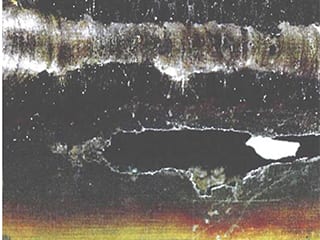
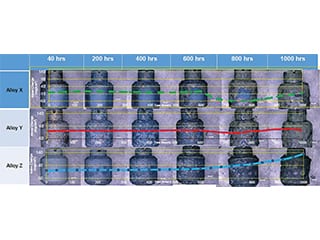
Adnan Syed described a very interesting journey through hot corrosion mechanisms of jet engines and industrial gas turbine components, (this being a well-known issue for the aviation and power generation industries). The talk included the possible hot corrosion mechanisms occurring in the gas turbine combustion environment, and some of the challenges industry is facing in their understanding and managing of turbine component degradation. He discussed the two main types of attack: Type I (high temperature corrosion) attack, in the range of 750 to 900 C, mainly due internal sulphidisation, and Type II (low temperature hot corrosion) attack, at temperatures in the range of 600 to 750 C (maximum rate of attack in the range of 675–730 C) and associated with pitting type attack. The importance of good alloy quality and the prevention of corrosion damage related to salt deposit chemistries was emphasised, along with ongoing Cranfield laboratory corrosion experiments and the use of thermodynamic software to help identify the phases formed, which in turn enables a better understanding of the mechanisms involved
Cranfield University – Adnan Syed. Examples of macrographs and mass change data for high temperature corrosion testing.
Lars Lichtenstein then considered the harsh operating environment for Marine Wind Turbines being increasingly deployed in our coastal waters, bringing us up to date on ongoing revisions to DNV GL documents on corrosion protection for wind turbines (which are under internal revision), DNVGL-RP-0416 and DNVGL-RP-B401. Changes highlighted included more guidance on the useful coating lifetime as introduced in DNV-OS-J101:2011 for the first time, and the relation with fatigue calculation and surface preparation, including the need for weld grinding. In particular the level of coating quality required at the end of the lifetime, andthe degree of effort needed to be put into inspection and repair of 15+ year old coating systems, so as to ensure ongoing integrity. Lars also discussed the issue of coating breakdown factors with regards to CP system calculation and on current drain of buried structures. He further highlighted new information on material selection for bolts and stainless steel, and what boundary conditions should be considered.
Brian Wyatt nicely linked into the previous day’s discussion on standards and recommended practices and emphasised the multiple zones / environments requiring many different corrosion control considerations / solutions within the Wind Energy Sector.
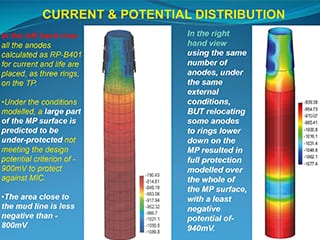
He highlighted the lack of competency seen in some projects performed to date and gaps in guidance that urgently require to be addressed as the renewables industry accelerates in scale. Velocity effects are a particular consideration resulting in increased levels of oxygenation at the steel/water interface which demand more robust CP designs, both in mechanical and electrochemical terms. The nature of the support structures, and limited scope for lower cost onshore anode installation, also lead to challenges to uniform anode distribution, particularly on Monopile type structures that replaced the earlier jacket type wind farm structures, that were more similar to the established requirements and practices of the Oil and Gas Industry, for which earlier DNV Codes were intended to cater for (editor, see technical article later in this magazine).
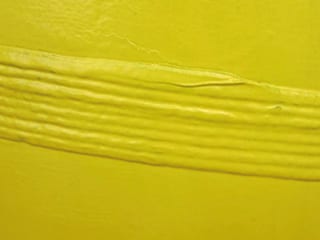
Andrew Woodward and Chris Matthews wrapped up the week with a great talk on outcomes from their recent joint industry project (JIP) with Chevron and Woodside Petroleum, as part of a new technology development programme in line with DNVGL-RP-A203. They have recently developed a new patented method of sealing on the inside of a CRA clad or lined pipe, thus enabling a permanent subsea repair solution. The new seal in the “CLiP” Connector takes advantage of the corrosion resistant and ductile properties of Alloy 625 (UNS N06625) and experience gained through extensive testing of graphite in order to create a seal that conforms to NACE MR0175 / ISO15156-3. The seal forms around all pipeline manufacturing tolerances and even localised irregularities such as internal weld seams. The seal can be easily integrated into existing mechanical connector configurations and is able to be adapted for both diver installed and remote repairs. The technology qualification was completed through a combination of analysis (including development of a parametric FEA model to cover all future design scenarios), 3rd party material testing, and component testing in specialised test rigs; all culminating in full scale testing within a mechanical connector. The presentation focussed on the analysis and testing aspects of the technology qualification process which highlighted all key failure modes that had to be addressed.
There has been much debate of late concerning the impacts of the coronavirus outbreak, but the success of these recent Joint and Online Events has proven beyond doubt that such obstacles can be overcome and that the thirst for corrosion learning remains as strong as ever.
As usual, full details of future branch events can be found on the ICorr Website, or by contacting: ICorrABZ@gmail.com, and copies of the majority of past branch presentations can be found at: https://www.icorr.org/aberdeen/ and a photo gallery for all Aberdeen events may be found at: https://sites.google.com/site/icorrabz/event-gallery. See also ICorr Aberdeen on LinkedIn at https://www.linkedin.com/in/aberdeen-icorr/.
It should be noted that the planned ‘Industrial visit (Oceaneering), an “Alternative / Interactive Industrial Event’, will now take place on 25th August 2020, and readers should also be aware of the upcoming Aberdeen joint event with TWI on 24th September 2020 covering Environmental Corrosion of Fasteners. More details of both events will follow soon on the ICorr website and social media. All of Aberdeen’s remaining 2020 events will be Online.
Brian Wyatt – Corrosion Control Ltd. Example of Advanced CP Modelling used to optimise Galvanic Anode Positioning.
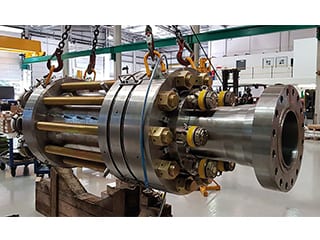
Connector Subsea Solutions Ltd – Andrew Woodward and Chris Matthews. An assembly showing the use of CRA’s in subsea clad pipelines and repair of connections. DNV GL approval was awarded to the CRA clad and lined pipe end seal in December 2019.
Pictured: Adam Lea-Bischinger, CEng CMgr MEng CMRP Eur Ing, Snr. Consultant with Fokus – Reliability and a Specialist in Asset Management and Performance Improvement.
The branch held its 7th event of the 2019/2020 session, on 27 April. This was the first of 5 technical presentations of the annual joint Institute of Corrosion/MCF (Marine Corrosion Forum) programme, held Online this year over 5 days, due to the COVID crisis. The heavily over-subscribed webinar was jointly chaired by Phil Dent (MCF) and Stephen Tate (ICorr-ABZ) with Lewis Barton (MCF) as webinar manager and with Dr Yunnan Gao (ICorr-ABZ) and Institute of Corrosion HQ jointly promoting.
The branch was very pleased to host Adam Lea-Bischinger, a Snr. Consultant with Fokus – Reliability, who currently holds several roles in Aberdeen including, Branch Chair of IAM – Institute of Asset Management, online course tutor in Asset Management for the University of Aberdeen, and Snr. Advisor to the Board of Pavan Asset Value Managers.
Adam has 15 year’s experience working in maintenance, reliability, asset management and inspection covering major oil and gas, power, mining and infrastructure projects worldwide, and holds a masters degree in Engineering, Materials and Corrosion with post graduate training in Inspection and NDT.
Adam spoke enthusiastically on asset management and how it can deliver value to an organisation. He carefully described the six core elements of asset management, the work of IAM, and the development and roll-out of ISO 55000:2014 which defines terminology, requirements and guidance for implementing, maintaining and improving an effective asset management system, and gave examples of UK and overseas companies operating the ISO 55000 system, including many utilities, major transport operators and drilling companies, who all having significant investments to protect and maintain for their full life-cycle.
The now established standard has three key parts:
ISO 55000 – Asset Management – Overview, Principles and Terminology
ISO 55001 – Asset Management – Management systems – Requirements
ISO 55002 – Asset Management – Management systems – Guidelines for the application of ISO 55001
According to the IAM, “These three international standards are important not only for their content, but because they represent a global consensus on what asset management is and what it can do to increase value generated by all organizations.”
The conceptual model, developed by IAM to show the core elements of the ISO 55000 series standard containing six main groups and thirty nine subjects is detailed below:
• Asset Information • Asset Information Strategy • Asset Information Standards • Asset Information Systems • Data & Information Management
• Decision Making • Capital Investment Decision Making • Operations & Maintenance Decision Making • Lifecycle Value Realisation • Resourcing Strategy • Shutdown/Outage Strategy
• Risk & Review • Risk Management • Contingency Planing • Sustainable Development • Management of Change • Asset Health Monitoring • AM System Monitoring • Management Review • Asset Costing & Valuation • Stakeholder Engagement
The importance of team-working and good communication was heavily stressed, so as to achieve good LOF – Life of Field Design, and to avoid the too often prevailing SILO (compartmentalised) type mentality within organisations.
An extensive Q&A followed with questions on topics such as the use of ‘Hands-Free’ asset management software, conditioning monitoring, cyber security threats from wireless devices, and the management of ‘Late Life’ assets. Various aspects of implementation of ISO 55000 guidance were also discussed and highlighted global differences in asset management methods and regulation.
Following from the success of the April webinar with MCF which had an attendance exceeding 70 on all 5 days, it is now planned that the Institute of Corrosion will work together with MCF to continue the close co-operation now established, for its July meeting, in Birmingham, with webinars running between 6-10 July 2020, as the resumption of ‘Face to Face’ meetings is not being expected before that date.
On the 29th April, members of the Aberdeen Branch also participated in the online CED Working Day and Symposium on ‘Corrosion Control in Transport and Infrastructure’, with Alistair Seton of the Aberdeen Committee chairing the Oil and Gas Working Group.
There has been much debate of late concerning the impacts of the coronavirus outbreak, but both the Institute of Corrosion/MCF Webinars and the CED Online event, has proven beyond doubt that such obstacles can be overcome and that the demand for corrosion learning by whatever method, is as strong as ever.
As usual. full details of future branch events can be found on the ICorr Website, or by contacting: ICorrABZ@gmail.com. Copies of the majority of past branch presentations can be found at: https://sites.google.com/site/icorrabz/resource-center, and a photo gallery for all Aberdeen events may be found at: https://sites.google.com/site/icorrabz/event-gallery.
It should be noted that the planned Aberdeen event of Tuesday 23 June – ‘Industrial visit (Oceaneering), an Alternative / Interactive Industrial Event’, is currently postponed (awaiting Scottish Government instructions), with a new date to be advised, as soon as is possible.
The branch held its 5th event of the 19/20 season at RGU Aberdeen, with a paper entitled “Structural Integrity Issues: under-deck, air-gap, splash zone assessment / deterioration / repair mechanisms, (for corroded / fatigued conductors, caissons and risers)” by Chris Tierney, SETS. This was a highly successful 1st joint presentation with EI – The Energy Institute, with 75 attendees.
The first part of the presentation considered, conductor integrity, hidden risks and corrosion mitigation, and in the second part Chris discussed new platform-launched technologies for repair of caissons and conductors subsea on ageing assets. After a decade in the subsea engineering sector with Technip, Chevron Upstream Europe, and Pro Dynamic Lifting (PDL), Chris founded SETS in 2011 as a subsea engineering and consultancy specialist. A platform splash zone is an area of multiple risks to production due to the high likelihood of mechanical damage to elements running through this area, cracking and in some geographical locations, very high corrosion rates. SETS provide innovative, engineering and tooling services to deliver efficient conductor management and repair solutions. The company have continued to innovate, learn and produce solutions for this difficult work zone and have been at the forefront of the design and development of technically advanced subsea tooling for conductor cleaning and inspection, clamp repair and shim installation. Unusually, their technology is remotely operated from topside, eliminating the requirement for diver support, and dramatically reducing time and cost. Their success in this area has resulted in the recent acquisition of the company by AquaTerra ( Kintore, Aberdeenshire).
The SETS presentation concentrated on conductors but the technology is equally applicable to caissons and risers. Conductors run from seabed to wellhead, providing environmental protection to the most vulnerable well components. A conductor should be considered a complex system, and its integrity managed accordingly, spanning wells, structural and operational functions. The condition of conductor and guide frames at the spider deck reflect the condition of these at the first elevation subsea. These are the most highly utilised areas in a conductor system, subjected to the greatest environmental loads and generally where majority of defects present themselves. The presentation discussed in detail, marine corrosion, fretting, fatigue, damage mechanisms and progression rates affecting conductors on ageing assets. Chris explained how different marine environments worldwide impact on conductor, caisson and riser integrity and following this, there were many thoughtful questions from the audience.
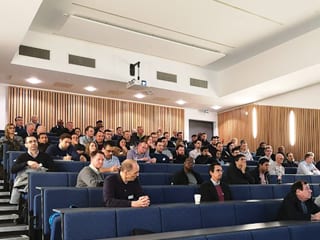
A full house, attended this first IE/ICorr joint event.
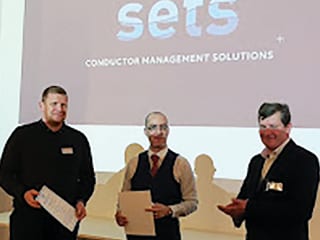
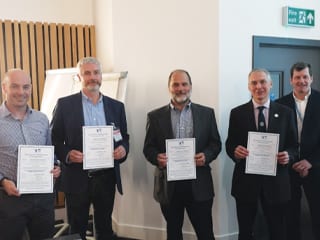
Branch chair, Stephen Tate, closes the event with Certificates of Appreciation to Roy Milne (Vice Chair of EI – Energy Institute and Chris Tierney, Managing Director of SETS.
The February 2020 evening meeting with 55 attendees opened with a discussion of the new ICorr logo and re-branding of the Institute to provide a much needed re-start and more professional focus, with the key being firmly on corrosion prevention by all available means. Following this introduction, there were very informative twin presentations by DNV-GL on risk based inspection activities, covering both PSVs (Pressure Safety Valves) and FPSO’s (Floating Production, Storage and Offloading) units.
The first presentation, by Dr Chris Bell discussed how data analysis of servicing has helped reduce cost and improve safe interval servicing of PSVs. PSVs are installed in process and utility systems to prevent build-up of internal pressure, or external effects such as fire. Over pressurisation of any vessel, or other equipment item, with energy released from the pressurised fluid, or the hazardous or flammable nature of the contents, can have significant consequences on a platform. Valves can block through build-up of wax, gunk or corrosion products within the system and the PSV will fail to lift. For this reason, PSVs are classed as safety critical when protecting hydrocarbon containing equipment and must be safety tested on a regular basis. The testing cannot generally be done in-situ, and valves most usually have to be taken onshore, tested, refurbished and refitted. Typically there are over 100 PSVs on a platform so it is worth optimising the maintenance interval. This can be done by data analysis to find the appropriate time to service the valve based on previous history and ensure a safe practice whilst minimising costs, and the inspection interval can be set so that the residual risk of failure is acceptable.
0.5 billion hours of service data for PSVs have been analysed from 10,311 tests and 544 failures by DNV-GL to allow optimisation of maintenance intervals and manage the inspection of PSVs. A methodology was developed that combined qualitative and quantitative RBI analysis. This multi-layered assessment gained the most information possible from the data, and as an outcome, the average maintenance interval was changed from 37 to 44 months and the test failure rate dropped. So, for an average PSV maintenance cost of £1000, total cost has now reduced by £ 1.1m from £6.5m to £5.4m per year.
The second presentation was by Dr Madhu Parlapalli, who presented a paper on risk based inspection (RBI) of FPSO Cargo Tanks. Risk based inspection in the oil and gas industry of piping, pressure vessels and other critical equipment has been used more recently for planning structural inspections. For floating structures like FPSOs where there are additional requirements to satisfy in the form of Classification Society rules, although risk based approaches are allowed under these rules there are relatively few examples of where this has been applied to plan structural inspections on FPSOs, for items such as cargo or ballast tanks.
It is operationally quite inconvenient to carry out inspections of these tanks on a fixed 5-year interval in line with a standard Class schedule. A risk based inspection schedule has to take account of all relevant degradation mechanisms and the corresponding means of inspection. For FPSO cargo tanks the main degradation threats are fatigue cracking and corrosion / coating degradation and of course general inaccessibility for inspection. The RBI process involves developing a structural hierarchy of ‘accessible’ elements, identifying the relevant ‘failure modes’ and damage mechanisms then evaluating the ‘probability’ ranking for the relevant mechanism. The ‘consequence’ ranking for safety, environment or business impact is then added, and the risk level is evaluated using an agreed risk matrix with the client/owner. An inspection plan can then be developed for different inspection activities to form an optimised inspection schedule. Case studies were presented for ‘hotspots’ identified on an FSPO and RBI analysis used to look at the fatigue degradation mechanism and a coating degradation mechanism. An extensive Q&A followed these 2 excellent papers.
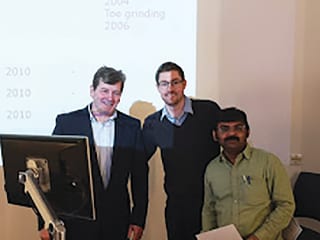
Branch chair, Stephen Tate with Dr Chris Bell and Dr Mahdu Parlapalli of DNV-GL.
Full details of future branch events can be found on the diary page of this magazine and on the website, or by contacting: ICorrABZ@gmail.com. Copies of the majority of past branch presentations can be found at: https://sites.google.com/site/icorrabz/resource-center, and a photo gallery for all Aberdeen events can be found at: https://sites.google.com/site/icorrabz/event-gallery
A special reminder is drawn to the August 2020 Annual Corrosion Forum (ACF), which unfortunately has now been cancelled owing to the Covid.19 outbreak and knock-on financial effects.
The Institute of Corrosion continues to follow the official UK government guidelines on how to mitigate the spread of coronavirus (COVID-19).
Our major priority is the safety and welfare of our members, officers and staff. Our main office at Corrosion House is open, with appropriate social distancing and safety measures in place for our staff and visitors.
Our training course providers will provide regular updates via their websites.
We appreciate the patience and support of our members in these challenging circumstances.
The branch held its 4th event of the 2019/2020 session at its usual venue, RGU, with a presentation on “The Application of bismuth based alloys to address Oilfield challenges” by, Paul Carragher (BiSN), Lance Underwood (BiSN) and Angus MacLeod (BP).
This was a highly successful joint presentation with IOM3 – The Institute of Materials, Metals and Mining, which has recently celebrated its 150 year anniversary. The BiSN speakers discussed in detail their Wel-Lok sealing technology which utilises a unique combination of a thermite powered chemical heater and a bismuth based alloy to deliver an efficient down hole sealing capability, using standard oilfield deployment methods.
The thermite heater provides the energy to melt the bismuth alloy in situ, allowing the heavy liquid alloy to flow by gravity to the desired location. As the bismuth alloy cools, it expands on solidification to provide a seal. Paul Carragher started BiSN in 2010 with the insight to develop new and innovative sealing solutions for the oil & gas industry, and explained the use of bismuth in downhole sealing applications
Lance Underwood, Principal Engineer at BiSN Oil Tools, who has has over 30 years of experience in the industry, then provided further insights into the development of new technologies for plugs for oil wells, covering materials selection, downhole corrosion control and long-term corrosion testing programmes. He illustrated some of the rigorous testing requirements for downhole oilfield tools including bits, mud-motors, turbo-drills, under-reamers, hammers, and laser drilling.
Angus MacLeod (Senior Intervention Engineer with BP), with 22 years Oil and Gas industry experience, then followed this up with some actual case histories from BP operations worldwide, where this technology has been applied offshore, to shut off water production in open-hole gravel pack completions, as well as the work being done to qualify the alloys, as a permanent well abandonment material. In his current role, Angus is responsible for developing new welltechnology as part of BP’s Upstream Technology Group, primarily focussed on “Life of Well Surveillance” and “Plug & Abandonment”. The event generated a huge level of interest and many questions were asked, which can be found, together with the answers, on the branch website.
At the close of the meeting, the branch chairman, presented all speakers with a Certificate of Appreciation from the branch.
Full details of future branch events can be found on the diary page of this magazine and on the website, or by contacting: ICorrABZ@gmail.com.
Copies of the majority of past branch presentations can be found at: https://sites.google.com/site/icorrabz/resource-center and a photo gallery for these events is at, https://sites.google.com/site/icorrabz/event-gallery
Particular attention is drawn to the 2020 Corrosion Awareness Day to be held on Tuesday 25thAugust at, Petrofac Training Centre, Forties Road, Montrose, Angus, DD10 9ET. The day will include several practical demonstrations with teaching, this year themed on fabrication and external corrosion management.Further Details about this can be obtained from the branch Chair: Stephen Tate, email: Stephen.Tate@external.total.com
Angus MacLeod highlighted the many practical applications for this new Downhole Sealing Technology.
The Aberdeen Chair Stephen Tate, presented all speakers with Certificates of Appreciation.
We use cookies to optimize our website and our service.
Functional
Always active
The technical storage or access is strictly necessary for the legitimate purpose of enabling the use of a specific service explicitly requested by the subscriber or user, or for the sole purpose of carrying out the transmission of a communication over an electronic communications network.
Preferences
The technical storage or access is necessary for the legitimate purpose of storing preferences that are not requested by the subscriber or user.
Statistics
The technical storage or access that is used exclusively for statistical purposes.The technical storage or access that is used exclusively for anonymous statistical purposes. Without a subpoena, voluntary compliance on the part of your Internet Service Provider, or additional records from a third party, information stored or retrieved for this purpose alone cannot usually be used to identify you.
Marketing
The technical storage or access is required to create user profiles to send advertising, or to track the user on a website or across several websites for similar marketing purposes.