Setting Coating Specifications for Environment and Durability
Before undertaking surface preparation, it is critical that you consider the protective paint system to be used to protect the steel structure from corrosion. In this article, we continue our review of ISO 12944 with an overview of protective paint systems – Part 5 of the standard.
What is a protective paint system?
A protective paint system is a corrosion protection layer designed to protect the steel from the corrosivity of its surrounding environment (ISO 12944-2).
A paint system may include the following coats of paint:
- Priming coat – the first coat of a coating system
- Intermediate coat – any coat between the priming coat and the top coat
- Tie coat – any coat which is used to improve the adhesion between coats or to eliminate void defects during paint application
- Stripe coat – a further coat to increase thickness in vulnerable areas such as edges, welds, and threaded items such as bolted connections
- Top coat – the last coat in the coating system
How do you select the appropriate protective paint system?
When considering which protective paint system, and, indeed, which type of paint should be used, you should consider the corrosivity of the environment, the structure itself, and durability requirements.
ISO 12944-2 details five environmental categories for onshore assets, from low corrosivity (C1) to very highly corrosive environments (C5). There is also a CX category that has been introduced to cover offshore environments, and which is described in a new section of the standard (part 9).
CX was introduced into the 2018 revision of the standard. In the previous version of ISO 12944, the C5 (severe) category of corrosion was split into two sub-sections: C5(I) for industrial environments and C5(M) for marine environments.
The C5(M) category clashed with another standard, ISO 20340, concerning the protection of offshore structures, which had a much more onerous test requirement. There was an anomaly with the relatively benign test regime for C5(M) which allowed the use of these systems in extremely severe corrosive environments such as offshore structures, leading to coating failures.
The 2018 revision of ISO 12944 has abolished C5(M) and now there is just C5 to represent a very severe onshore environment. ISO 20340 has been absorbed into ISO 12944 as a new section (Part 9), and the new corrosivity category of CX (extreme offshore) introduced for any structure that will be situated in an offshore marine environment with the more onerous test qualification regime; thereby closing the C5(M) loophole.
In addition, there are four categories for water and soil, as follows:
- IM1 River installations and hydro plants (fresh water)
- IM2 Immersed structures without cathodic protection (sea or brackish water)
- IM3 Buried structures (soil)
- IM4 Immersed structures with cathodic protection (sea or brackish water with cathodic protection)
The paint system used will also depend upon the structure and type of steel. For example, new structures are low-alloy steel as well as galvanised and metallized steel. The type of steel will be a determinant of the surface preparation undertaken as well as the appropriate paint system to employ to protect the structure from corrosion.
Where a steel structure is to be installed in a C1 environment, there should (at least in principle) be no need for a protective paint system. However, the structure may be susceptible to corrosion before it is installed, during transportation from the fabrication facility and the construction phases of the structure, and so may require temporary protection.
There may also be a decorative requirement for the steel structure that requires a paint system to be applied even though C1 poses little or no corrosion risk. Usually a C2 system will be specified in this case.
Durability definitions are provided in the first part of the standard, and depend upon several factors, including:
- The structure’s design
- The conditions during application
- The environmental exposure after application
- The surface preparation grade and work carried out
- The condition of joints, edges, and welds prior to surface preparation
The paint system used should be appropriate for the period until the first major maintenance is due – its durability. Durability is expressed in terms of four ranges:
- Low (L): up to 7 years
- Medium (M): 7 years to 15 years
- High (H): 15 years to 25 years
- Very High (VH): more than 25 years
The durability range is not a ‘guarantee time’. Durability is a technical consideration/planning parameter that can help the owner set up a maintenance programme. A guarantee time is a consideration that is the legal subject of clauses in the administrative part of the contract. The guarantee time is usually shorter than the durability range. There are no rules that link the two periods of time.
Protective paint systems will be subject to many external influences such as weathering, mechanical damage, erosion etc. during their service life, and as such they should be regularly inspected and, if necessary, minor maintenance should be performed in order for the overall system to achieve its life to first major maintenance.
Types of Paint
The list of generic coating types in ISO 12944-5 5 is not intended to be exclusive or exhaustive. Other coating technologies not mentioned in the standard, including older traditional coatings or new innovative coatings may be classed as ISO 12944 conforming, provided that they have passed the qualification laboratory tests in Part 6, or have demonstrated a real-time track record in the given environment.
Coatings may be reversible or irreversible:
- Reversible coatings dry by solvent evaporation, and the process can be reversed by re-dissolving in the original solvent.
- Irreversible coatings dry by solvent evaporation (if a solvent is present) followed by a chemical reaction or coalescence. The coating cannot be dissolved in the original solvent or a solvent that would usually reverse the process.
Paints may be air-drying; waterborne; chemically curing; or moisture curing.
Dry film thickness
One of the key changes between the 2012/13 iteration and the 2017/18 iteration of the standard is the way that dry film thickness (DFT) is now treated by the standard. Previously the specified DFTs were provided as guidance. They are now mandatory normative minimum thicknesses.
Manufacturers had pushed DFTs for their products lower, to remain cost competitive. It was felt that this was creating a ‘race to the bottom’ and risking premature failure of protective paint systems. Therefore, the standard has been changed to require mandatory minimum DFTs.
ISO 12944-5 sets out recommended generic paint specification film thicknesses, which global experience has shown can give acceptable standards of corrosion protection for any given combination of durability period (L to VH) over the full range of corrosivity categories from C2 to C5 (CX is covered separately in Part 9).
The suggested paint systems are set out in a tabular fashion to indicate suggested product types and the minimum values for nominal DFT and the minimum number of coats required for the specification.
The systems in ISO12944-5 are not intended to guarantee proof of performance but have been arrived at by the considered judgement and experience of the international panel of industry and academic experts who worked on the ISO standard development.
Any proprietary paint specifications based on the model specifications that are laid out in ISO12944-5 MUST be verified by either laboratory pre-qualification testing as outlined in ISO12944-6; or have a proven track record of performance in the appropriate environment before they can be specified as being in accordance with the standard.
Should you apply protective paints systems on-site or in shop?
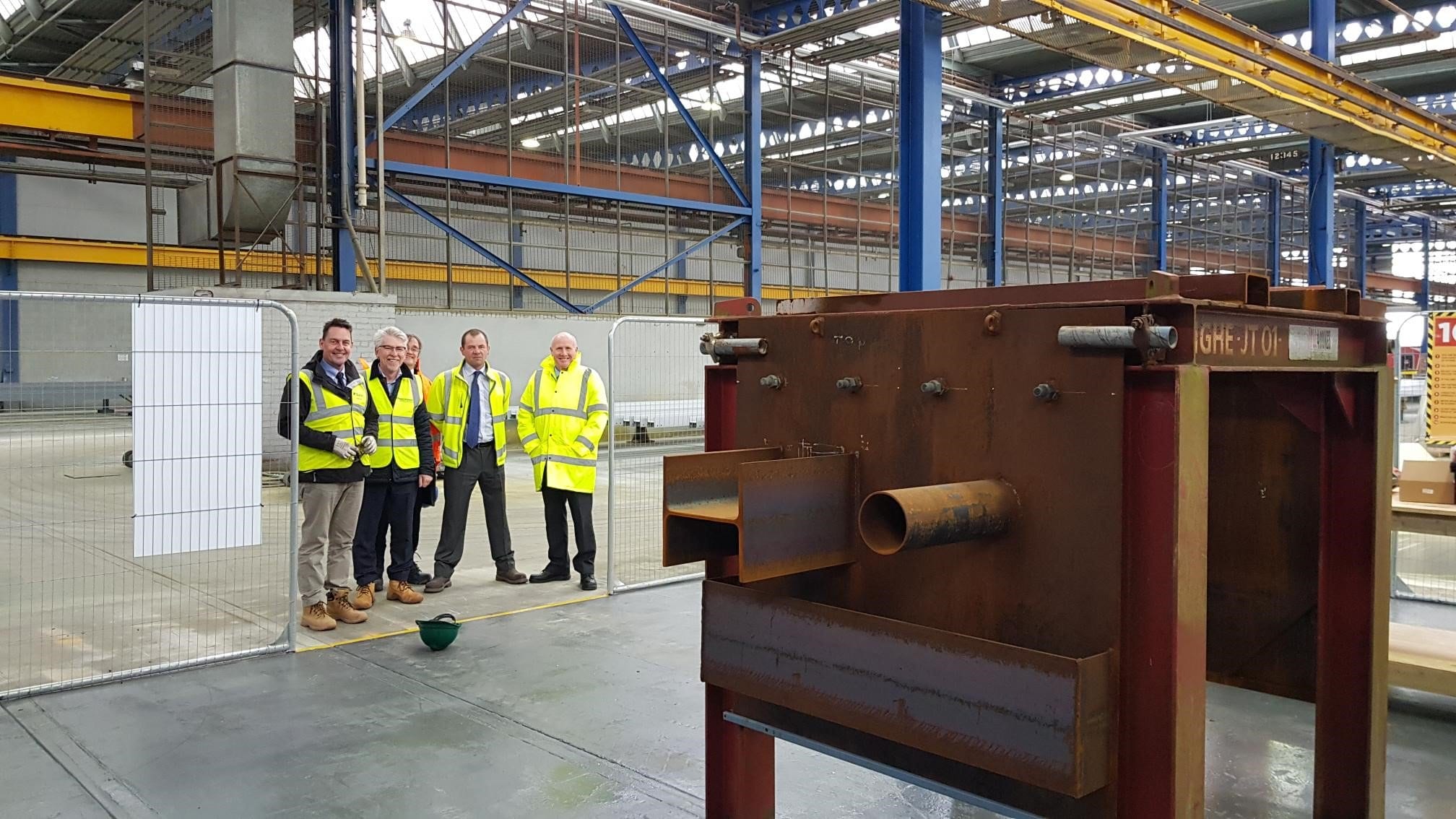
Finally, the standard also recommends that the complete protective paint system should, whenever possible, be applied in shop rather than on-site.
This approach enables greater control over the application in a controlled environment in which temperature and humidity are more stable, with better waste control and ease of repairing damage as well as easier access for the paint applicators to reach all areas of the components and for inspectors to reach and assess all areas of paintwork. Of course, this approach cannot be applied to aged structures that are being refurbished on-site.
To ensure your painters and inspectors are fully up to date with ISO 12944 and all of its parts and are working to the latest industry standards and best practices, the Institute of Corrosion offers Coating and Inspection Training Courses presented by Argyll Ruane and Corrodere. For more information, contact us today.