




Passive magnetometry based corrosion monitoring and mechanistic simulation – Aberdeen Technical Talk

The branch held its last technical meeting of the 2020/2021 session on 25th May with guest speakers Sieger Terpstra (Shell Global) and Chetan Laddha (Sinclair Energy Partners). This most interesting 2-part talk was entitled: ‘Passive magnetometry based corrosion monitoring and mechanistic simulation.’

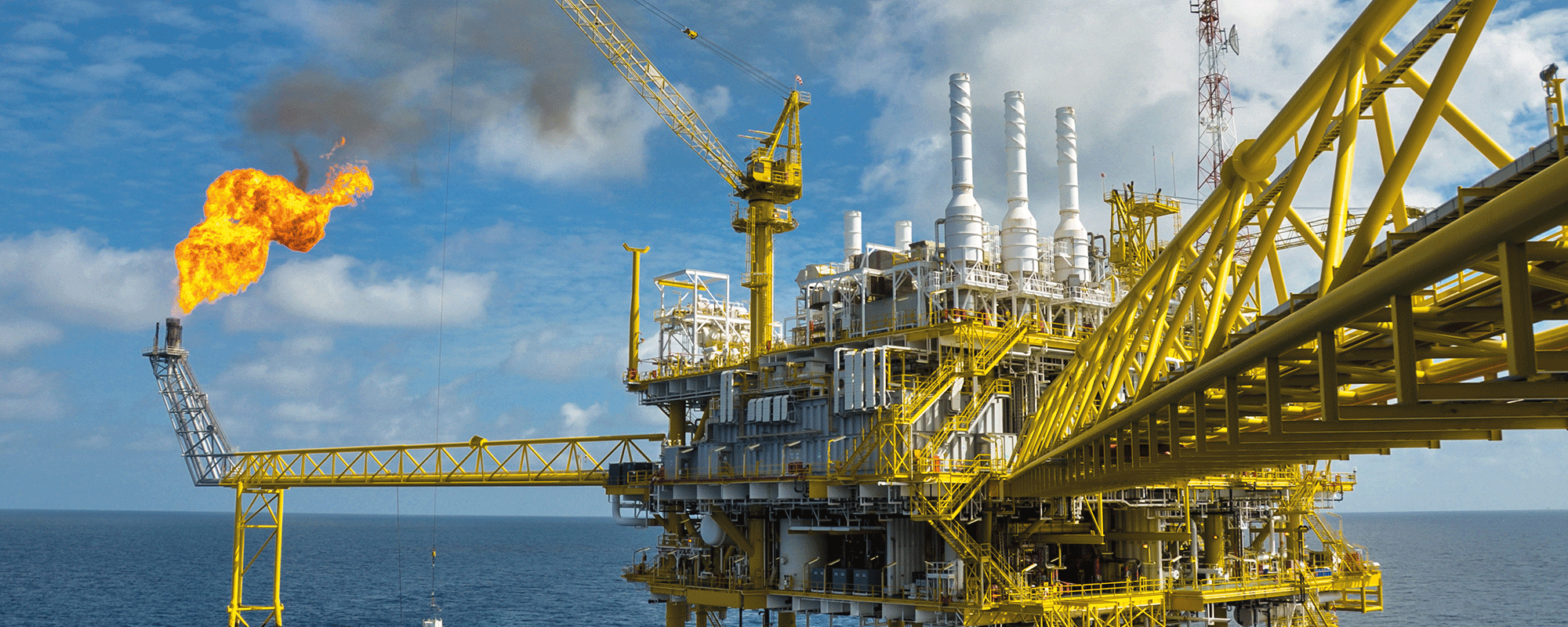
In corrosion monitoring there are a number of NDT techniques both automated and non-automated which can be used to detect and monitor integrity anomalies, but these techniques have limitations for remote areas like ‘normally unmanned Oil and Gas platforms (NUI’s) and for locations requiring rope access teams (RAT’s). Additionally, they all require power to be provided for active probes / magnets and to enable wireless operation / data transfer. The Shell Global WiSense project which has been under development for many years, solves most of these issues as it can run on batteries for a 5-year time span and eliminates the need for routine NDT Inspector access, which is a great benefit in hazardous areas. It also eliminates human error in NDT measurement. The WiSense project uses passive magnetometry, a measurement principle that allows monitoring of localised and non-aged based degradation mechanisms, which pose a higher threat than uniform wall loss mechanisms. The passive magnetometry based corrosion monitoring technology has been developed to facilitate area coverage at the target CML’s (corrosion monitoring locations) and provides continuous automated monitoring. Another major advantage is that the sensors do not require any contact with the metal surface – allowing placement on top of coatings or thin insulation and providing frequent, repeatable measurements for trend detection.

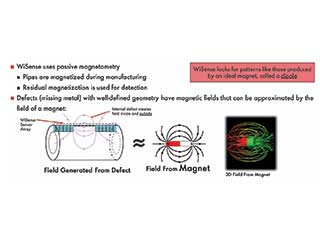
When pipes are manufactured they become magnetised and this residual magnetisation can be utilised for fault detection. Defects or ‘missing metal’ with well-defined geometry create detectable magnetic fields inside and outside the pipe. WiSense is a Non-Intrusive flexible patch containing arrays of 3 axis magnetometers sitting on the outer side of the pipe. The magnetometers sense the pipes’ residual magnetic field, and time series subtraction differentiates defect fields from the common pipe baseline magnetic field. The sensor array within the mounted patch produces B-field ‘maps’ resembling dipole patterns and the built-in algorithms find corroded regions by searching for these dipole patterns. The WiSense patch can be deployed in a number of different pipework configurations including straight and elbow sections,

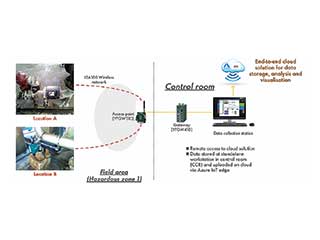
reducer /diffusers, injection points, valves and orifices. The installations from area locations can be monitored on a wireless network through an access point to the control room gateway and a data collection station.

In order to identify defect types, templates are set up by recreating typical defects on pipes using Teflon masking and acid etching of the surfaces to create different types of defects that can then be scanned by the system and used as a model to identify the real and naturally created defects on the pipe. This has been performed on straight and elbow bent pipes both inside and outside. Validation testing can be performed by acid etching on the inside of the pipe while the sensor is on the outside of the pipe monitoring the defect being created. As the magnetometers are detecting dipoles, which are essentially point sources, it is important that real defect geometry is included in the models as they have lateral dimensions and depth, and it leads to a better match than a pure dipole. The technology has been piloted for over 3 years at multiple facilities in downstream as well as upstream areas of Shell operations. Additionally, the technology has gone through independent validation testing with TWI to verify its performance.

In the second part of the talk, the practical benefits of the WiSense technology were further described in relation to commonly applied chemical treatments for corrosion prevention. A mechanistic model was developed to simulate the performance of corrosion inhibition and thereby prediction of inhibited corrosion rates. The overall impact and benefits from corrosion monitoring technology can be significantly enhanced if they are used in parallel with a prediction or simulation technology. The root cause of the majority of Loss of Primary Containment (LoPC) incidents or accidents can often be traced back to degradation mechanisms.

The main driver behind this project development has been that corrosion inhibitors are provided as a “black-box” from the suppliers (exact formulations being closely guarded secrets), which makes it extremely difficult to model the performance of corrosion inhibitors. Additional electrochemical modelling allows testing and simulation of the piping process inhibition mechanisms, without needing to know the underling chemistry of the inhibitor chemical. The simulation can be used to identify both over and under inhibited systems and further, to reduce the cost (corrosion inhibitor qualification programmes. The corrosion monitoring and prediction technologies are used as two complementary tools. Using each tool on a standalone basis has limited value and applicability, however integrating prediction with a real-time feedback loop from sensing allows a step-change in integrity management capability. The combined technologies can help with generating early warnings of integrity issues and facilitate the transition to predictive operation and maintenance.

Upcoming Events:

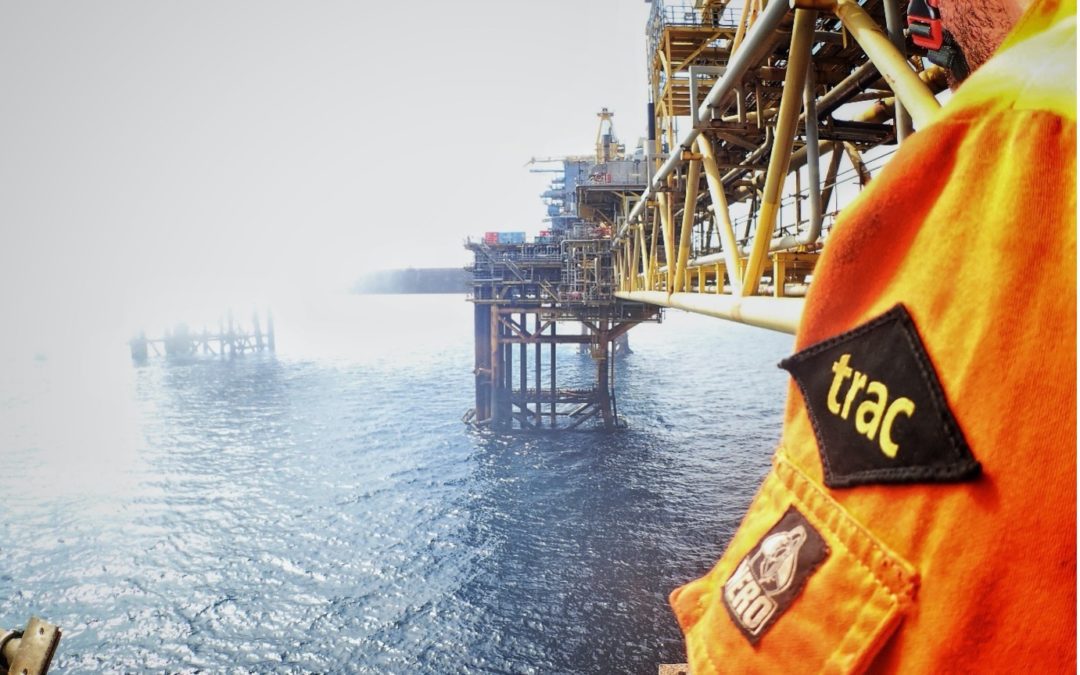
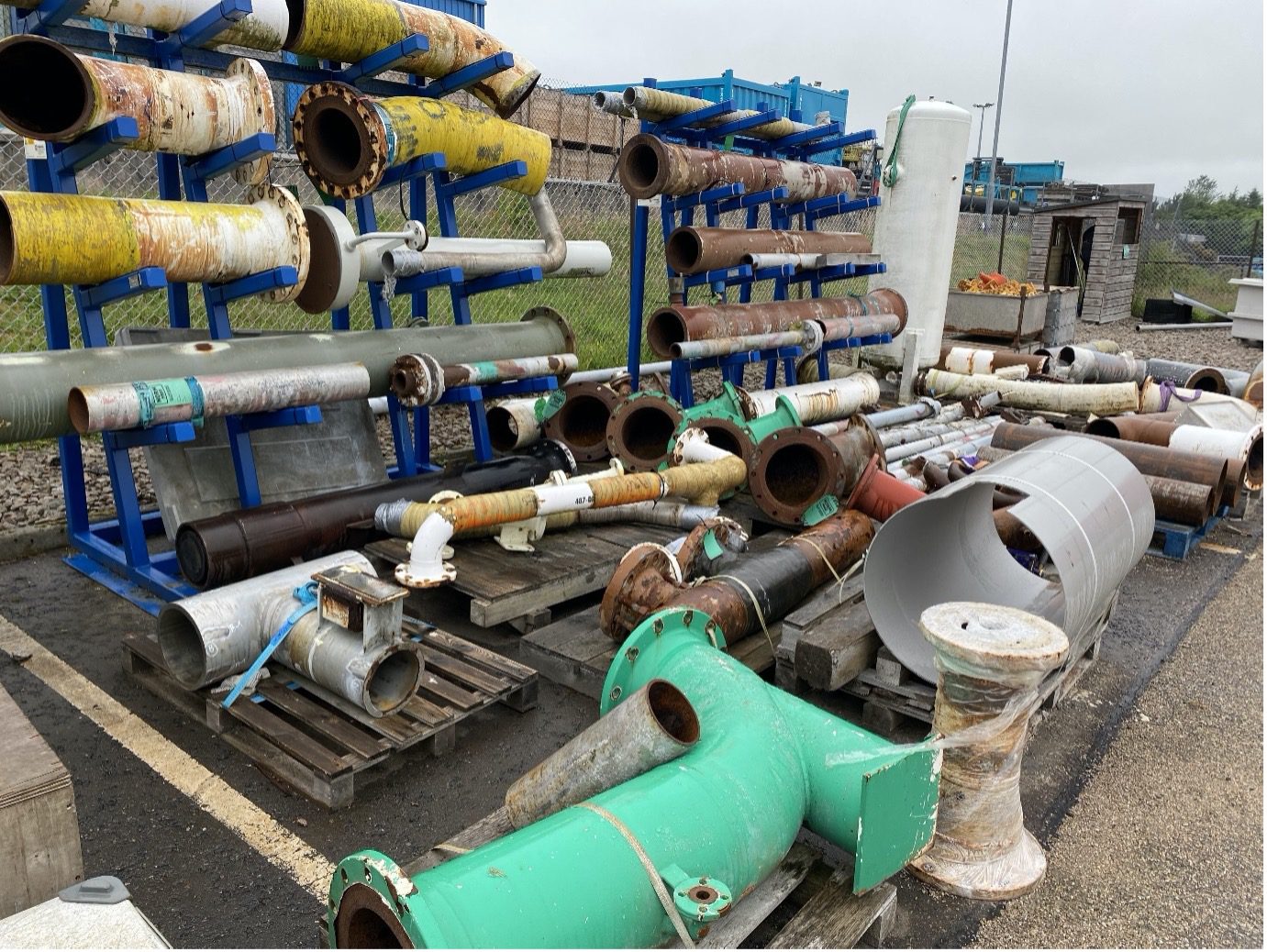
The branch has several significant events scheduled for later in the summer, including its Annual Corrosion Forum (ACF) on 24th August. This year the event will be held at the TRAC Oil and Gas premises close to Aberdeen Airport.  This will be the first branch event in more than a year to be held in person. The theme for the ACF this year is external corrosion management. The programme consists of 8 presentations from speakers from various companies, all very active in the integrity management field. Practical demonstrations in the TRAC workshops will follow in the afternoon. Those interested in joining this event should register their interest with the branch events co-ordinator, Amir Attarchi (amirattarchi@gmail.com), giving full name, company and contact email address

The branch is also supporting the Institute’s ‘Fundamentals of Corrosion for Engineers (FOCE)’ course, which is to be held between 13th – 17th September at the Aberdeen City Jurys Inn Hotel. This course is designed to provide non-corrosion specialists with insights into the principles of corrosion processes and causes which are specific to a range of common industries including: concrete, coatings, cathodic protection, oil and gas, water and renewables sectors. This an intensive one week, classroom-based course with an examination
on the final day.

Applicants will gain a basic understanding of underlying corrosion processes in a wide range of industries which may offer career growth to an engineer, or to anyone who wants to investigate potential job opportunities in corrosion or related fields. On successfully passing the course exam allows personnel with relatively limited work experience in corrosion to apply for Professional Membership of the Institute of Corrosion.   Those wishing to attend should download the Application Form from the ICorr Website and submit to: admin@icorr.org.  Other general enquiries should be addressed to the Course Leader Dr Jane Lomas on jane7lomas@gmail.com

The branch will also be inviting applications soon for the ICorr Young Engineer Programme (YEP) which it is very pleased to support, following in the footsteps of the highly successful and extremely popular London Branch programmes. For the Aberdeen rotation, the YEP course will reflect the extensive locally based Oil and Gas related Industries and of course also the rapidly growing Renewables Energy Sector. Initial enquiries may be sent to Hooman Takhtechian HTakhtechian@oceaneering.com
Annual Corrosion Forum (ACF)

Annual Corrosion Forum (ACF)

The Aberdeen Branch has several significant Events scheduled for later in the Summer and would particularly like to draw your attention to its Annual Corrosion Forum (ACF) scheduled fo 24th August. This year event is arranged to be held in TRAC Oil and Gas premises close to Aberdeen Airport.

This will be the first ICorr event in more than a year that we are going to conduct in person. The theme for the ACF this year is External Corrosion Management. The programme consists of 8 presentations to be presented by speakers from various companies, all very active in the integrity management field. Practical demonstrations in the TRAC workshops will follow in the afternoon.

Those interested in joining this Event should register your interest with ICorr HQ using the attached Form.

  • This event is going to be conducted in an outdoor area with Catering Marquee (with restricted access into the main building) in order to be able to accommodate the speakers and the attendees with proper social distancing#.    #The current COVID precautions mentioned in the attached agenda, may be varied due to easing or tightening of government recommendations or TRAC instructions.

Download Agenda

Download Registration Form

Royce calls for Technology Roadmap to help co-ordinate action to address degradation issues following  publication of landscape report

Royce calls for Technology Roadmap to help co-ordinate action to address degradation issues following publication of landscape report

The Henry Royce Institute for advanced materials today calls for co-ordinated action to address the significant degradation challenges presented by the transition to net-zero through a ‘Technology Roadmap for Net-Zero’. This follows the publication of the ‘Degradation in structural materials for net-zero’ report which presents the results of a landscaping exercise conducted by Royce and Frazer-Nash Consultancy, supported by the Institute of Corrosion.

Such a roadmap would select which technologies should be prioritised for investment and also be attached to key dates linked to when they’re expected to come online. It could also define the most cost-effective investment pathway to net-zero, allowing industry and academia to develop Research, Development and Innovation (RD&I) programmes in alignment with clear timescales for delivery.

Read Full Story

Download Report


Apprenticeship – End Point Assessment (EPA)

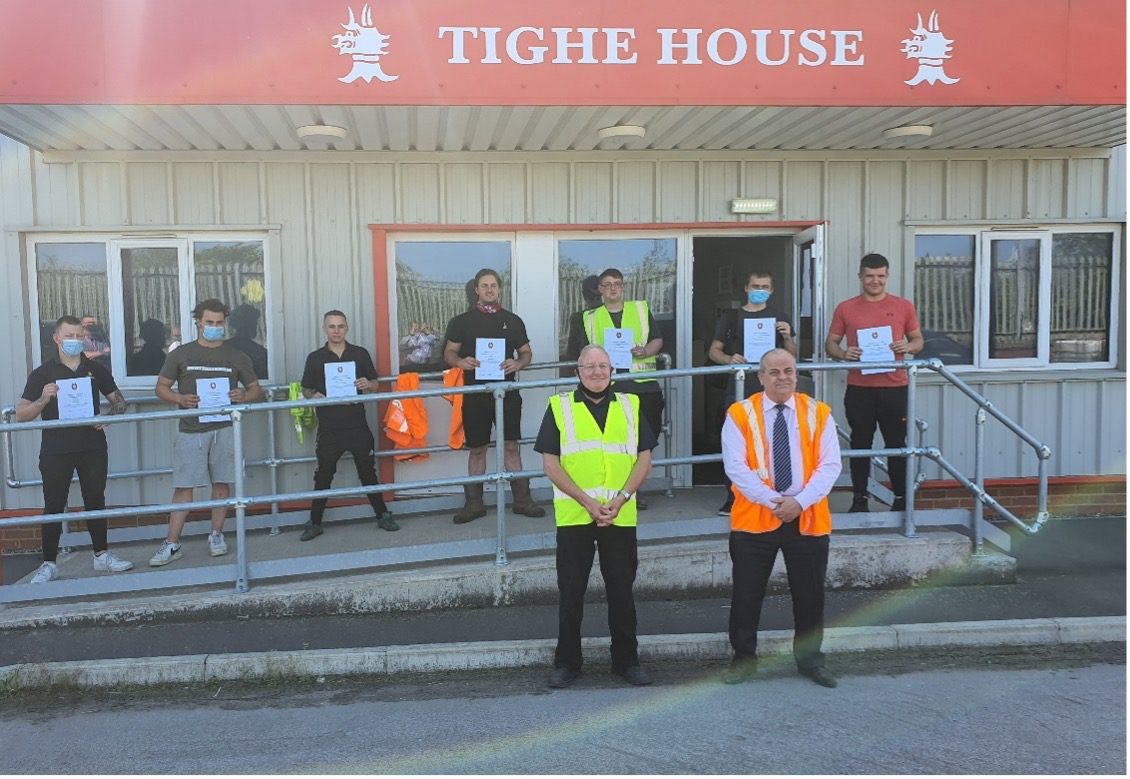
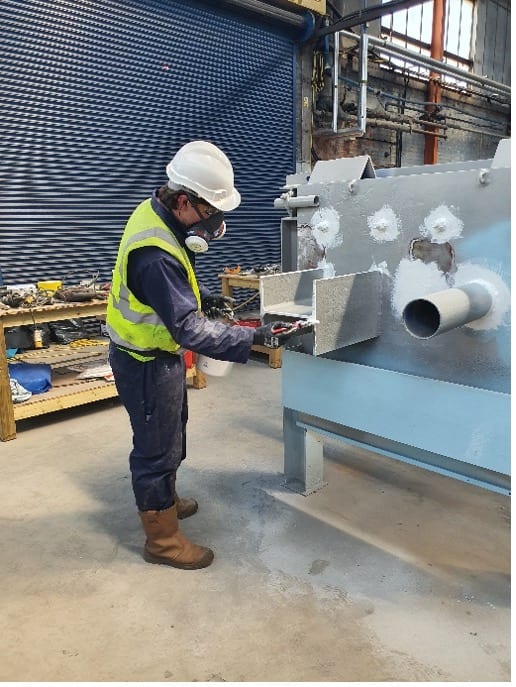
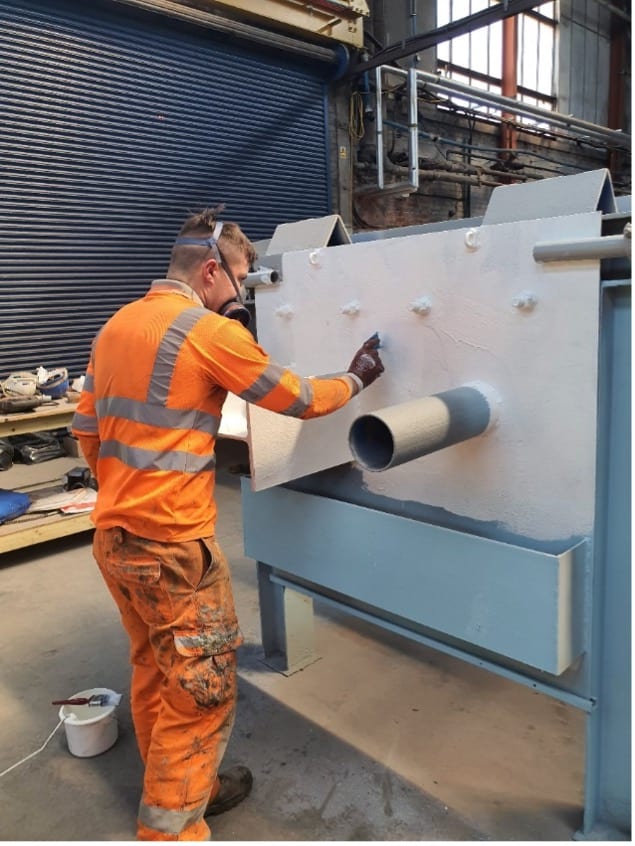
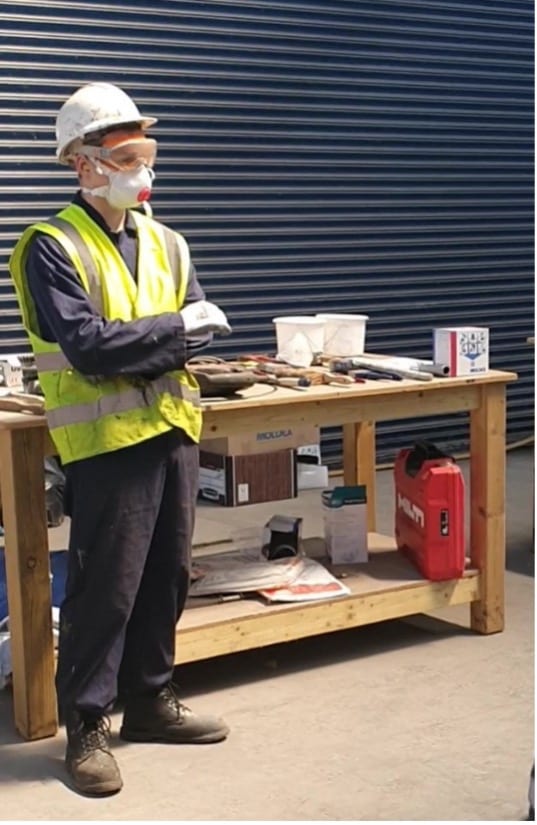
The Industrial Coating Applicator Apprenticeship 2020/21 concluded in June 2021 with their EPA at the Jack Tighe Foxs Hills facility in Scunthorpe.

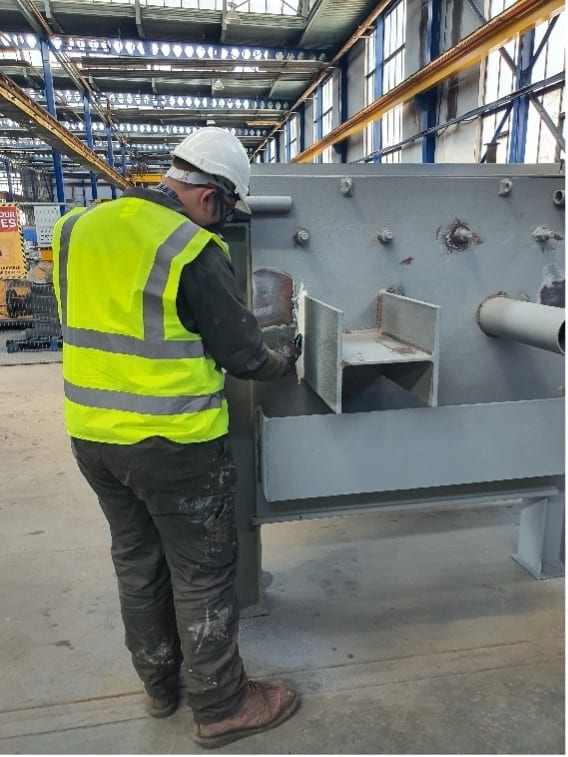
Each of the 7 Apprentices completed a formal professional interview in the morning and a practical examination in the afternoon witnessed by the 2 EPA assessors.

All of the students passed with Distinction and are a great credit to both DN Colleges and Jack Tighe Ltd.

In the interview with Alan Jones the Contracts Manager he informed us that the Apprentices from the 2020 intake are earning money for JTL already which is a great turn round in a short period of time.

From L – R: Danny Lings, Sonny Burnett, Samuel Proctor, Rici Short, Shaun Watkins, Filip Wajda, Kian Power Front row: Alfie Dunn, John Whittaker


Shaun Watkins – Distinction

Shaun is currently working in the factory spraying materials such as Sherwin-Williams Macropoxy 400 which has been used on walkways and bridges.

He has been working on epoxy intumescent materials sprayed by the SW approved applicator but then finished off by roller to obtain a smooth finish. He has also been working on tank internals/externals and footbridges. His next ambition is to master the art of grit blasting.

Samuel Proctor – Distinction

Samuel is currently working on site in Portsmouth and has been working on the aircraft carriers Prince of Wales and Queen Elizabeth as well as HMS Duncan HMS Westminster end HMS Hurworth. He has confined space training and has been working in the ballast tanks. He’s also been applying non-skid deck paint to the flight-decks.

Prior to the Apprenticeship Samuel worked on a pig farm where he would often have to start but 2:30 AM. He’s extremely enthusiastic and sees protective coatings as a career, he would like to travel and get to the next level.

Rici Short – Distinction

Rici was working in a vape shop which he considered to be a dead end with no career and is very enthusiastic about the protective coatings industry. He is the third generation in his family to work for Jack Tighe Ltd and often has great stories from his grandad. Rici works in the factory mainly in the blast pen where they use 2½ millimetre steel shot but he has used olivine and garnet for smaller specific jobs. He has also been working on the application of epoxy PFP and has an applicator card from Jotun.

He would like to gain the experience of site work as his next stage of progression.

Danny Lings – Distinction

Danny has been working out on site at Dow Corning in South Wales and on the Snodland train bridge and would like the experience of working in the factory.

Danny has had some really good experience and enjoys his work immensely. In the practical work Danny excelled and had a very high focus on health and safety.

Kian Power – Distinction

Kian has been working mainly in Scotland on the SSE pen stocks although he has been working on crude oil tanks at Killingholme which resulted in a very interesting discussion about the use of primers and solvent free coatings for internal tank lining.

Kian really enjoys his work and demonstrated excellent health and safety, teamwork and leadership skills through the practical examination.

Filip Wajda – Distinction

Filip is interested to stay within the factory environment and is looking to learn more about the whole process.

Fellow’s Corner

Fellow’s Corner

Non-metallic materials are an essential element of facilities engineering in upstream E&P operations, being widely used in a range of functions from seals and corrosion barriers to piping and structural elements. This short article offers a brief insight into the capabilities of some of the available options.

In common with metallic materials, the selection and successful use of non-metallics is dependent on a detailed understanding of the way in which each material responds to the service environment over the life of the component, or system. Degradation of the capabilities of non-metallic materials can occur through a range of physical and chemical processes.

Elastomers (or rubbers), are widely used in oilfield sealing applications. These are highly elastic, polymeric materials, used in compression seals in a range of downhole, subsea, topsides and pipeline applications. Various nitrile and fluorocarbon-based materials are typically used to span the range of temperatures, pressures and fluid environments, met in oilfield operations. Processing of these materials involves “vulcanisation” or curing, using small amounts of sulphur, amines or peroxides to create highly flexible and extendable polymers.

A number of key failure modes can affect elastomer seals.  Some relate to the elastomer material being used outside its working temperature range, or in fluids with which it is incompatible. This can lead to chemical embrittlement, softening, compression set, large volume changes, and loss of elasticity at low temperature – any or all of which can lead to a seal failing. Pressure related failure modes can also be important. Extrusion damage occurs when a rubber seal is forced into the gap which it is sealing as a result of the applied pressure. Gas decompression damage occurs primarily in dry gas duty, being qualitatively similar to the “Bends” suffered by divers when returning to surface.

Qualification of seals and the material’s performance in any component or system, is typically carried out using a combination of materials and system testing, taking account of the time and temperature dependent properties of the materials involved. Finite element analysis (FEA) modelling of the complex, non-linear and time dependent materials properties of elastomers has proven vital in understanding some applications.

Further applications of a range of elastomer materials are to be found in hydraulic and transfer hoses, and in the flexible joints that are incorporated in metal drilling and catenary risers.

Thermoplastic materials, such as polyethene and nylon, find wide application in controlling the internal corrosion of steel pipelines. Such materials are fundamentally different in nature to elastomers, having a much smaller elastic range, and the way in which they are used is therefore somewhat different. As their name suggests, these materials are reversibly melt-processible, often being formed by extrusion for oilfield use. Materials are typically differentiated by their maximum service temperature capabilities, and their resistance to particular service fluids. So, for example, polyethylenes are typically used in water duties to a maximum of 60°C or so, while nylons can be used in hydrocarbon production service up to 90°C.

Thermoplastic liners have an extensive track record, both onshore and offshore, in providing a corrosion barrier within carbon steel pipelines, particularly for water injection service, where suitable metallic options are typically much more expensive or much less reliable. There are a number of “pull-through” liner technologies which can offer cost effective solutions to mitigate internal corrosion challenges in both new build projects and in rehabilitation. Often these involve “tight-fit” polyethylene liners, which have their outer diameter mechanically reduced, while they are pulled into a steel pipe. Release of the pulling force allows the polymer to relax back against the internal diameter of the pipe, which remains the structural element of the pipeline. Another option is the use so-called Reinforced Thermoplastic Pipes (RTPs) which are used, with good economic benefit, as loose fit, “slip liners” or even as stand-alone pipelines, in a range of production and injection services. These are composites in which glass, aramid or carbon fibre, or wire, reinforcement, is wound over a plastic pipe, in order to increase its pressure capability.

Thermoplastic materials additionally find wide application in unbonded flexible pipes, importantly being used as the internal and external sheathes in these complex pipe structures. The flexibility of these pipes often enables faster or more convenient offshore installation and hook-up, and provides excellent fatigue resistance in a range of harsh environments. Several thermoplastic materials are used as internal pressure sheathes, responsible for primary containment. Nylon materials are widely used in production service up to 60 – 90°C, with fluoropolymers used at high temperature, to around 130°C. In water injection, polyethylene is normally used. External, or outer, plastic sheathes contain the whole pipe structure, helping to keep the high strength steel wire reinforcement out of contact with seawater. Typically, this sheath is made of polyethylene for static pipes and nylon for pipes used in dynamic service.

Thermosetting materials, such as epoxy and phenolic resins, form the basis of a further set of related oilfield corrosion protection technologies. These materials employ a chemical hardener to permanently, and irreversibly, “set” the polymeric resin, often with temperature applied during curing to accelerate that reaction.

Fusion bonded epoxy (FBE) is used very widely as an external pipeline coating. It is applied as a powder to a carefully prepared surface, and melted and cured in situ to give a coating approximately 0.5 mm thick.

FBE also finds wide use as the base layer in multilayer coatings with polyethylene and polypropylene. Further, options for subsea insulation involving the incorporation of glass microspheres into thermoplastic layers are also widely accepted, for use on subsea pipelines. The thermoplastic nature of these materials allows the pipelines to be reeled for transport and installation, where required. Where more rigid insulation is acceptable, systems incorporating glass-microspheres into epoxy resins can be applied, for example to subsea manifolds.

Epoxy resins, and similar materials such as vinyl esters, find wide use in the painting and external protection of structures and equipment, as well as in the internal coating of vessels, typically in combination with glass flake fillers.

Glass reinforced epoxy pipes find a range of downhole, piping and pipeline applications, mostly in water service. Typically, this kind of pipe is rated to 16 bar design pressure, although some small diameter products can go much higher than this, for example in downhole tubing applications. A range of adhesively bonded, mechanically jointed and threaded connections are used across the industry. Qualification of composite pipes, and other non-metallic pipe options, is normally undertaken through a series of full-scale pipe tests, including: pressure rating using long term (10,000 hr) testing of pipe and end fittings, characterisation of minimum bend radius for storage, transportation and operation, characterisation of axial load capability, testing of capability of the product to handle gas service, and performance of the product in UV. A range of other engineering design issues also need to be worked through with each product, such as internal surface roughness, heat transfer co-efficient, and pipe expansion due to pressure and temperature.

Glass reinforced epoxy pipes can also be used as a liner, with composite lined downhole tubing having a long track record of successful onshore use in a range of corrosive services, and in offshore water injection. Some composite liners are capable of continuous service at up to 80°C in water-based applications. Insertion of the stiff liner into the steel host, on a joint-by-joint basis, leaves a small annulus between the liner and the host which is typically filled with cement, to transfer mechanical and pressure loads to the carbon steel host. Modified tubing connections allow the liner to be properly terminated, with thermoplastic corrosion barriers providing continuity of corrosion performance.

Finally, it is worth mentioning the use of external epoxy composite wraps to repair and reinforce topsides piping. This is a very convenient repair technology that does not involve hot work and which can be used to seal thinned, cracked or holed piping, at very least as a temporary solution until full repair can be affected.

The use of non-metallic components is an integral part of the materials selection challenge in oil & gas production. Given their frequent role in maintaining a primary or secondary containment, selection and use of these materials should be as carefully scrutinised as with the metallic components within any well, processing facility or pipeline.

For additional information see,  B Kermani and D Harrop, Corrosion and Materials in Hydrocarbon Production; A Compendium of Operational and Engineering Aspects, Wiley, 2019, Chapters 9 & 15.